The Story
Why it exists.
The beginning
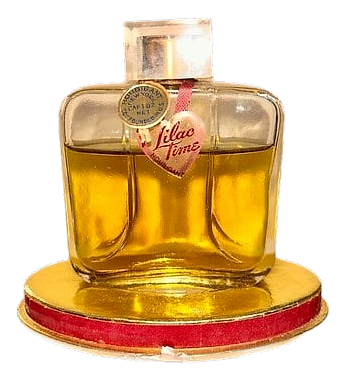
Released in 1940, Lilac Time arrived from Houbigant with a conviction that felt almost radical in its simplicity. A single flower, turned inward. Lilac was already shorthand for youth, for first love, for the kind of beauty that announces itself only to someone paying attention. Houbigant bottled that attention. The name does the work. "Lilac Time" isn't a description. It's a season, a specific window when the bushes bloom hard for two weeks and then vanish. The fragrance tried to catch that vanishing in glass. There is no citrus to dazzle, no spicy overture to pull a passerby off the street. Just the bloom itself, held up close, allowed to speak in its own voice without a chorus of competing notes crowding the stage. What the composition offers instead is patience.
What makes the composition worth revisiting is how restrained the brief is. Just the flower, a creamy fig underneath to give it body, iris for powder, and a base of musk and sandalwood to keep the bloom from floating away. It's a study in what florals can do when they stop competing for attention. The fig is the cleverest move. It isn't loud. It just rounds out the lilac's sharp greenness and makes the whole thing feel edible, almost like fruit left out on a windowsill.
The evolution
The first ten minutes are spring-sharp. Lilac does what lilac does in nature, opens green and slightly soapy, with that wet-stem quality that makes you think of pruning shears and a garden in early May. Fig arrives not as a fruit note but as a milky sweetness underneath, and the two play off each other for about an hour. The iris powder starts to settle in around the second hour, and the whole composition gets quieter, more intimate. By hour three or four, the sandalwood and musk take over and the lilac becomes memory rather than presence. The drydown is warm skin and clean fabric, the kind of scent that lingers on a collar the next morning. It doesn't project far. It just stays. The sillage is deliberately contained, a personal radius that rarely extends past an arm's length, and that intimacy is the point.
Cultural impact
Lilac Time arrived in 1940, a year that placed it inside one of the most demanding periods of the 20th century, yet the composition carried an air of pastoral calm that felt deliberately out of step with the headlines. The release focused on lilac, a flower that most houses of the era were leaving to one side in favor of rose and jasmine. That choice gave the launch a quiet point of difference.