
The Story
Why it exists.
The beginning
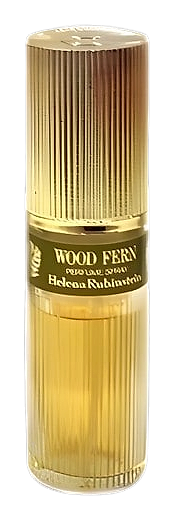
Wood Fern arrived in 1958 from Helena Rubinstein. By the late 1950s, Rubinstein was developing fragrances that reflected a clear point of view about what a luxury scent could be. Wood Fern leaned into a quieter, more aromatic direction rooted in green and woody notes, and it carries that sensibility from the first spray to the last trace on skin. The fragrance opens with a bright citrus accord that reads sharp and clean, the kind of cold-pressed brightness you get from tearing a leaf rather than squeezing fruit. From there, green leafy tones take over quickly, layered with the cool dampness of crushed foliage, as though you are standing among undergrowth after a long rain.
What makes the composition interesting is the way it balances an overtly aromatic fougere structure with a restraint that keeps things from feeling barbershop-generic. Oakmoss does the heavy lifting in the heart and base, lending that unmistakable cool, earthy dampness. Cedar steadies it with a dry woodiness rather than a resinous sweetness, which keeps the entire accord from tipping into something overly mossy or medicinal.
The evolution
The first thirty minutes feel almost like an herbal tisane. Citrus comes through first, bright but tempered, quickly absorbed by green leafy tones and the cool green dampness of crushed foliage. No sweetness, no heat, just fresh plant matter and a wood-tinged mineral edge. Somewhere around the one-hour mark, the cedar firms up. The composition stops smelling like crushed leaves and starts smelling like standing among them, the woody structure becoming more apparent while the citrus keeps sparking underneath. The oakmoss and green leafy notes settle in by the third hour, giving the whole thing a quiet, earthy depth that reads more forest-floor than cologne. There's no dramatic transformation, no hidden floral, no resinous surprise. What you smell at the start is essentially what you smell at hour five, just rearranged.
Cultural impact
Wood Fern sits among the lesser-remembered Helena Rubinstein releases, a 1958 composition from a house whose fragrance output has largely receded from contemporary visibility. Its aromatic fougere structure places it within the green fragrance tradition that ran through mid-century European perfumery, a category more often associated with masculine-leaning compositions but here rendered in a register that reads as green, woody, and slightly cool rather than overtly barbershop.