The Story
Why it exists.
The beginning
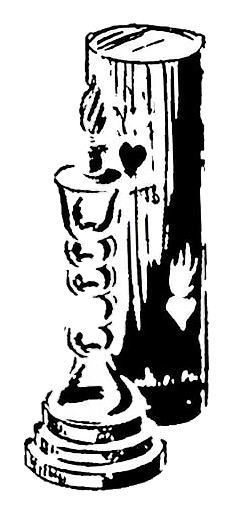
White Flame arrived in 1942, mid-century deep, when the world was reorganizing itself around women who'd already proven they could run empires without permission. Helena Rubinstein had built a name in cosmetics and fragrance, and the house carried a reputation for thinking of scent as something worth taking seriously. Substantive, considered, never just decoration. This one was pitched as deep and intense, a flame that burned longer than it looked like it would. The naming does the work. White Flame isn't red-hot passion or smoky seduction. It's the pale center of a fire that won't quit. Fresh-spicy, mildly aromatic, with orange rind and rhubarb lending a tart brightness to mint's cool grip.
What's interesting here is the tension between the opening's mint-and-citrus snap and what the composition does next. White Flame opens with a clarity that feels almost bracing, then softens into something rounder, warmer, more contained. The shift from that initial green snap to the quieter, spiced warmth underneath gives the fragrance a shape that holds your attention without ever raising its voice. The combination of orange rind and rhubarb is structurally unusual. Most citrus openings tend to read as clean, simple, almost interchangeable.
The evolution
First thirty minutes: the mint cuts clean across the top, green and cooling, while orange rind zings bright alongside something tart, that rhubarb note pulling the opening sideways into unexpected territory. It reads crisp, almost bracing, the kind of scent that could pass for a sophisticated cologne at this stage. The citrus and the mint do most of the talking, and the rhubarb bends the whole opening just enough to keep it from feeling predictable. Around the hour mark, the green brightness starts folding inward. The mint recedes, and the rhubarb's tartness softens into something warmer, more rounded. What's left feels less like a splash of citrus and more like the memory of one, softened by something quietly aromatic underneath. The orange rind fades from bright to golden, and a mild spiciness begins to surface, giving the composition a low hum of warmth that wasn't there at the start.
Cultural impact
White Flame arrived in a moment when perfumery was taking itself seriously as a craft, and the fragrance reflects that seriousness. It's a composition that wants to be worn, not just displayed, and the construction rewards attention. For anyone who encounters it now, decades later, White Flame offers a specific kind of pleasure: the discovery of a fragrance that wasn't built to please a crowd. It opens with a clarity that feels almost bracing, settles into warmth that sits close to skin, and holds its shape from first spray to last trace. The pale flame, the one the name refers to, turns out to be the whole point.