
The Story
Why it exists.
The beginning
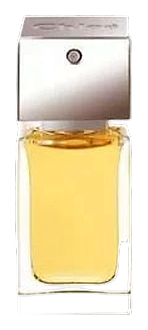
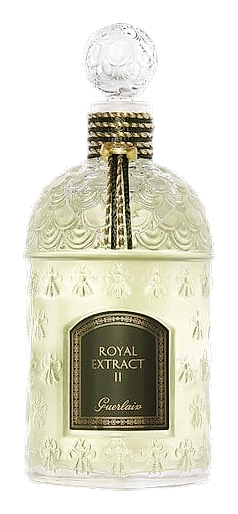
Royal Extract II emerged from Guerlain's ongoing conversation with nature, not the curated nature of formal gardens, but the kind that grows without permission. Thierry Wasser conceived it as a descent into wild forest: green, alive, slightly unkempt. The name says royal, but the scent behaves like something found, not given. It was developed for Harrods, the London institution that has long served as a bridge between French perfumery and the English appetite for something with character.
What makes this composition unusual is the interplay between green brightness and earthy depth. Most fragrances favor one or the other. Here, petitgrain and pink pepper open sharp and aromatic, then cede ground to a white floral heart that smells like flowers growing in shadow. The base, galbanum, moss, vetiver, keeps everything grounded in cool, damp earth. It's a vertical structure: bright canopy, flowering understory, forest floor. The galbanum deserves particular attention. It's not a common material, and here it does something essential: it keeps the florals from lifting away entirely, anchoring them with a cool, slightly medicinal green that says forest, not florist.
The evolution
The opening announces itself quickly, petitgrain's citrus-green bite followed by pink pepper's clean spark. Thirty minutes in, the white florals take over: hyacinth's cool watery bloom, orange blossom's sweeter warmth. The cedar appears around the hour mark, giving the heart a woody backbone that wasn't obvious at first. Then the base arrives. Galbanum shifts the register from floral to herbal, moss adds texture, and vetiver brings the earth. By hour three, the fragrance has become something quieter and deeper than its opening suggested. The drydown holds for another three to four hours on most skin, sitting close but persistent, the kind of longevity that doesn't announce itself but refuses to leave.
Cultural impact
Royal Extract II is exclusive to Harrods, which gives it a particular positioning, a Guerlain fragrance available in one place, for the wearer who makes the trip. The green-moss character has drawn comparisons to Chanel N°19 among those who have tried it, though Royal Extract II leans warmer and earthier in its drydown. The fragrance appeals to a specific sensibility: someone who wants Guerlain quality but gravitates toward the natural and the untamed rather than the polished and the floral.
The House
GuerlainGuerlain stands as one of the oldest and most revered perfume houses in the world, founded in Paris in 1828 by Pierre-François-Pascal Guerlain. What began as a boutique on rue de Rivoli quickly became the preferred destination for Parisian society, attracting dandies and elegant women who sought custom-crafted fragrances. The house's influence grew to such heights that Guerlain earned the title of Official Perfumer to Napoleon III after presenting Eau de Cologne Impériale to Empress Eugénie as a wedding gift in 1853. This royal patronage marked the beginning of Guerlain's enduring association with European aristocracy, as the house went on to create fragrances for Queen Victoria and Queen Isabella II of Spain. Today, under the creative direction of Thierry Wasser, the fifth-generation perfumer, Guerlain continues to shape the landscape of fine fragrance with a portfolio spanning over 1,100 olfactory creations. The house remains headquartered at its legendary Champs-Élysées mansion, a historic monument that anchors Guerlain's position at the intersection of heritage and contemporary luxury.
The Creator
Thierry WasserWasser gravitates toward green, crispy notes and the bold florals Guerlain is known for. Bulgarian rose appears repeatedly in his work, and he travels annually to oversee the harvest in Kazanlak.