The Story
Why it exists.
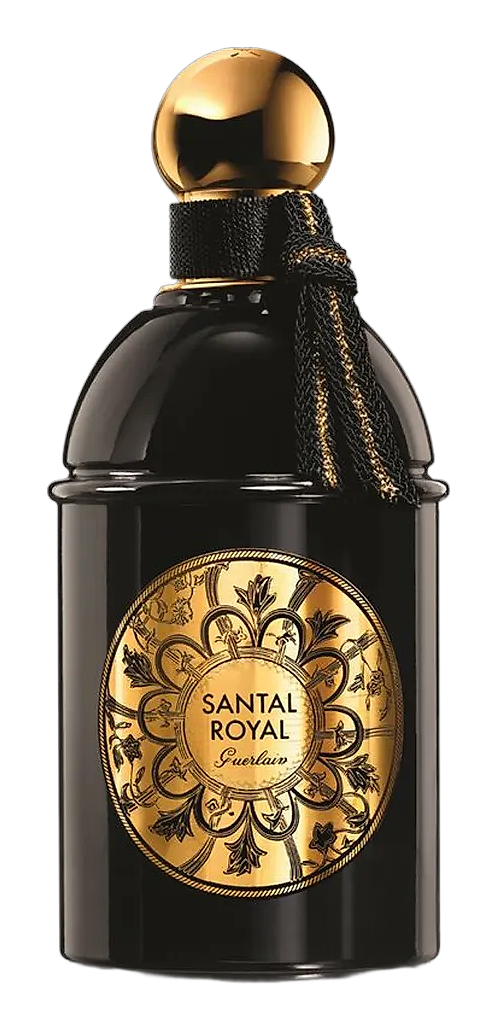
Oud and leather. Rose and sandalwood. When Thierry Wasser conceived Santal Royal in 2014, the brief seemed straightforward enough: layer the dark materials of the Orientals genre until something substantial emerged. But Wasser wasn't interested in volume. The Les Absolus d'Orient collection demanded something different, refined, not loud, confident without announcement. Rather than chasing the Western appetite for oud that still felt Western, he wanted to explore the conversation between darkness and its gentle counterweights. Jasmine and neroli arrived first, bright and citrusy, a delicate counterweight to what would follow. Rose came next, tempering the spice, softening the edges. By the time oud, leather, and sandalwood settled into the skin, Santal Royal had become something worth understanding: an Oriental that earns its refinement.
If this were a song
Community picks
No Ordinary Love
Sade
The Beginning
Oud and leather. Rose and sandalwood. When Thierry Wasser conceived Santal Royal in 2014, the brief seemed straightforward enough: layer the dark materials of the Orientals genre until something substantial emerged. But Wasser wasn't interested in volume. The Les Absolus d'Orient collection demanded something different, refined, not loud, confident without announcement. Rather than chasing the Western appetite for oud that still felt Western, he wanted to explore the conversation between darkness and its gentle counterweights. Jasmine and neroli arrived first, bright and citrusy, a delicate counterweight to what would follow. Rose came next, tempering the spice, softening the edges. By the time oud, leather, and sandalwood settled into the skin, Santal Royal had become something worth understanding: an Oriental that earns its refinement.
What makes Santal Royal distinctive is the relationship between its materials. Oud can be overwhelming, resinous, medicinal, insistent. Leather can be sharp, acrid, too much of a statement. But Wasser uses jasmine and neroli not as decorative afterthoughts but as structural counterweights. The floral opening isn't decoration. It's governance. It establishes the register: everything that follows will be warmer and more intimate, not louder. Rose and cinnamon in the heart don't amplify the darkness, they season it, create dimension. And the base, for all its depth, stays close. The sillage is moderate, the presence skin-deep rather than room-filling. That restraint is the point.
The Evolution
Santal Royal opens bright. Jasmine and neroli carry an aldehydic lift, orange blossom, if you're reaching, that feels immediate and expensive. Five minutes, the neroli cools further. Ten, something warmer arrives. The rose-cinnamon pairing in the heart doesn't so much bloom as settle, warmly spiced, with peach-like sweetness kept in check by the spice. Twenty minutes in, the base announces itself without announcement. Oud and leather had been waiting, not loud, but present, building quietly beneath the florals. The heart phase holds for the next two to three hours, florals and dark materials negotiating space. By the fourth hour, Santal Royal enters its drydown, and what unfolds is genuinely excellent. Oud remains the anchor, but sandalwood softens it into something milky and almost sweet. The leather recedes into warmth rather than sharpness. Amber and musk keep the fragrance skin-close, intimate, the kind of presence that requires proximity to notice.
Cultural Impact
Santal Royal exists in the upper tier of Guerlain's offering, positioned around the Les Absolus d'Orient collection, a range designed for the house's most serious collectors and those willing to invest in fragrance as an act of understanding rather than impulse. The 2014 launch came as Guerlain expanded its London presence through Harrods, a deliberate statement about reaching the collector who shops at the highest level. What followed was a decade of quiet appreciation: those who wear Santal Royal tend to understand orientals, tend to appreciate refinement over volume, tend to come back.

The House
France · Est. 1828
Guerlain stands as one of the oldest and most revered perfume houses in the world, founded in Paris in 1828 by Pierre-François-Pascal Guerlain. What began as a boutique on rue de Rivoli quickly became the preferred destination for Parisian society, attracting dandies and elegant women who sought custom-crafted fragrances. The house's influence grew to such heights that Guerlain earned the title of Official Perfumer to Napoleon III after presenting Eau de Cologne Impériale to Empress Eugénie as a wedding gift in 1853. This royal patronage marked the beginning of Guerlain's enduring association with European aristocracy, as the house went on to create fragrances for Queen Victoria and Queen Isabella II of Spain. Today, under the creative direction of Thierry Wasser, the fifth-generation perfumer, Guerlain continues to shape the landscape of fine fragrance with a portfolio spanning over 1,100 olfactory creations. The house remains headquartered at its legendary Champs-Élysées mansion, a historic monument that anchors Guerlain's position at the intersection of heritage and contemporary luxury.
If this were a song
Community picks
Warmth that lives close to the skin. Leather, oud, and florals threading upward, the kind of presence that requires proximity to fully appreciate. Music that mirrors restraint done right: sophisticated enough to reward attention, intimate enough to stay with you.
No Ordinary Love
Sade