The Story
Why it exists.
The beginning
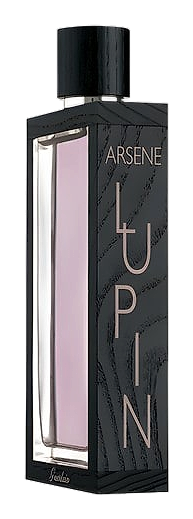
Jean-Paul Guerlain created Arsène Lupin Dandy in 2010 as part of Les Parisiens, a collection of Guerlain fragrances built around Parisian archetypes. The inspiration is immediate: Arsène Lupin, the gentleman thief who charmed his way through Paris society, stealing without ever seeming to try. The dandy, polished, witty, always one step ahead, became the olfactory subject. Jean-Paul Guerlain translated that specific tension into a fragrance: someone who walks into a room already knowing exactly how to leave it.
The note structure is built around contrast. Bright citrus opens, bergamot and bitter orange, clean and deliberate. Then the spices arrive. Cardamom and pink pepper don't shout; they shift the temperature of the composition. The drydown leans into frankincense, sandalwood, and patchouli, warm woods that stay close to the skin rather than projecting outward. It's a fragrance that changes gear halfway through, which is the whole point. A dandy wouldn't arrive the same way they leave.
The evolution
The opening is immediate: bitter orange and bergamot, sharp and confident. Soon the spices arrive, cardamom first, then pink pepper taking over from the citrus as the lead. The bergamot doesn't disappear. It retreats, becoming a cool undertone beneath the warmth. As the fragrance develops, frankincense takes the foreground. The smoky, slightly resinous quality of the olibanum sits alongside sandalwood's creaminess, with patchouli grounding everything. The sillage moderates as time passes, still present, but closer, more personal. On fabric, it lasts well into the next day.
Cultural impact
Arsène Lupin Dandy sits within Guerlain's Les Parisiens collection, a series built around Parisian character types. The dandy archetype attracts wearers who value wit and restraint over projection. The fragrance was renamed in 2011, dropping Dandy from its title to become simply Arsène Lupin.
The House
GuerlainGuerlain stands as one of the oldest and most revered perfume houses in the world, founded in Paris in 1828 by Pierre-François-Pascal Guerlain. What began as a boutique on rue de Rivoli quickly became the preferred destination for Parisian society, attracting dandies and elegant women who sought custom-crafted fragrances. The house's influence grew to such heights that Guerlain earned the title of Official Perfumer to Napoleon III after presenting Eau de Cologne Impériale to Empress Eugénie as a wedding gift in 1853. This royal patronage marked the beginning of Guerlain's enduring association with European aristocracy, as the house went on to create fragrances for Queen Victoria and Queen Isabella II of Spain. Today, under the creative direction of Thierry Wasser, the fifth-generation perfumer, Guerlain continues to shape the landscape of fine fragrance with a portfolio spanning over 1,100 olfactory creations. The house remains headquartered at its legendary Champs-Élysées mansion, a historic monument that anchors Guerlain's position at the intersection of heritage and contemporary luxury.
The Creator
Jean-Paul GuerlainJean-Paul Guerlain's style resists easy categorization, though richness and depth define nearly every composition. He favored opulent oriental structures, warm woods and resins, and florals treated with almost sculptural precision.