
The Story
Why it exists.
The beginning
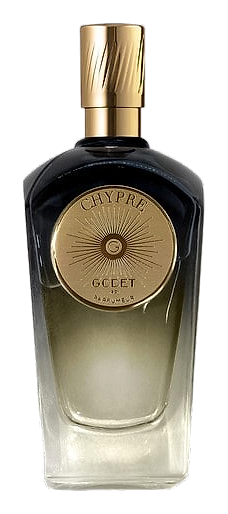
Julien-Joseph Godet formulated Chypre in 1908, the same decade the Art Deco movement was redefining elegance across the visual arts. Geometry, symmetry, intentional form, Godet wanted to build the same principles into a fragrance. Not a portrait of nature, but its architecture. The result was this perfectly balanced accord between rose, pepper, and moss. A formula that has held for over a century without revision. The name itself, Chypre, denotes both a family of fragrance and the island of Cyprus, birthplace of Aphrodite, where perfumery's raw materials have been cultivated for millennia. Godet named it for what it was: a composition rooted in classical perfumery tradition, built to endure.
The Chypre structure is what makes this fragrance notable. Oakmoss, patchouli, and the interplay between them form a foundation that has defined a fragrance family for over a century. Where other chypres have softened over time, reformulated, diluted, made safe, Godet's 1908 version keeps its original architecture intact. The addition of iris and galbanum to the heart gives this particular chypre a powdery-green complexity that distinguishes it from its peers. The incense and benzoin in the base don't overwhelm, they deepen. This is the kind of composition that rewards patience, revealing different facets as the hours pass.
The evolution
The opening announces citrus with immediate clarity, bergamot and lemon cutting clean, rose softening the sharpness from the first minute. The black pepper registers as warmth more than heat, present but never aggressive. This phase lasts roughly 30 minutes before the transition begins. The heart arrives as iris takes center stage, its powdery-violet character marrying with cedar's dry woody structure. Galbanum adds a crisp green edge that keeps the floral from becoming precious. This middle phase builds over the next 2-4 hours, forming the core character that makes Chypre distinct. The drydown settles into oakmoss and patchouli, the chypre signature, earthy and dark without apology. Benzoin adds warmth, incense adds an aromatic smoky quality. The base lingers close to the skin for another 2-4 hours, intimate and long-lasting. The next morning, there's still something there, faint, resolved, warm.
Cultural impact
The 1908 Godet formulation of Chypre represents the original vision for this structure, a rose-and-pepper accord grounded in moss. Those drawn to Chypre tend to value its architectural quality, its refusal to soften, and the way it rewards patience. The Art Deco sensibility endures.