
The Story
Why it exists.
The beginning
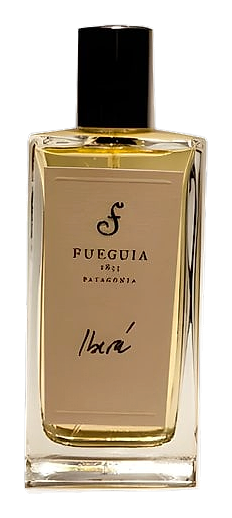
Iberá belongs to Fueguia 1833's Destinos collection, a series that treats each fragrance as a postcard from a specific Patagonian landscape. The name itself points to a place rooted in the south, carrying the quiet geography of its origin even when worn far from home. Julian Bedel composed the scent in 2010, distilling that sense of place into a three-note structure built on petitgrain, jasmine, and orange blossom. The composition reads as something pared back and deliberate, a tight triangle of materials where each element holds its own line without crowding the others. There's no heavy base dragging things downward, no bright top shouting for attention.
What makes Iberá interesting is what Bedel left out of the formula. The jasmine here never tips into indolic territory or pulls in the dense sweetness that often weighs white florals down. Instead it stays at its greenest possible reading, almost herbal, with a cool clarity that keeps the whole composition on its toes. That jasmine gets sandwiched between petitgrain above and orange blossom below, which creates a frame where the floral stays suspended rather than settling into skin.
The evolution
Iberá opens with a sharp, green splash of petitgrain that reads almost like breaking a leaf between your fingers. The first minutes feel almost bracing, a cold snap of bitter citrus foliage that announces itself without raising its voice. As that initial brightness settles, the scent pulls inward, and the jasmine begins to surface in a cool, green register, faintly herbal and never heavy. There's a quiet hay-like warmth that creeps in underneath, a soft vegetal hush that softens the opening without dulling it. Hours in, the composition relaxes into a quieter, woody-floral hush, as if the whole structure has exhaled. The orange blossom drifts up gently from the base, lending a warm skin-like softness that lingers close to the wearer.
Cultural impact
Iberá sits inside Fueguia 1833's Destinos collection, a series that organizes fragrance around the idea of place, each bottle pointing toward a specific location rather than a mood or an occasion. Within that context, the scent appeals to wearers who want their fragrance to evoke a quality of light and atmosphere, a sense of having been somewhere, rather than a personality statement. The composition itself reflects that priority, keeping the material list tight and the architecture restrained so that the wearer carries something atmospheric rather than declarative.