
The Story
Why it exists.
The beginning
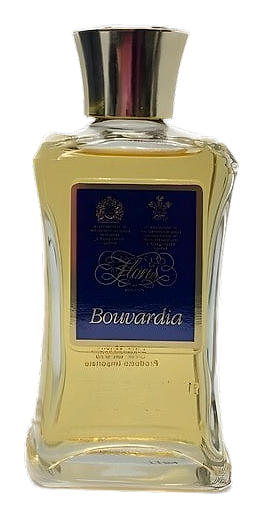
Bouvardia arrived in 1994 from Floris, the London perfumery house. The name borrows from the bouvardia flower, a plant associated with subtle sweetness and ornamental use. Floris's decision to name a composition after a flower most people couldn't pick out of a lineup signals something deliberate: this is a scent built around the idea of a bloom you smell before you see, present but unannounced. The composition reads as warm, floral, slightly old-world, and uninterested in proving anything to anyone. What makes Bouvardia worth paying attention to is how the name itself becomes a kind of quiet signature.
The interesting move here is how few notes do the work. Carnation, clove, and rose form a triangle that perfumers have leaned on for decades, but pairing it with gardenia, jasmine, and a sandalwood-vanilla base shifts the balance. Instead of reading as a pure spicy oriental, the composition pulls toward something creamier and more floral than expected. Laurel adds a green aromatic edge that keeps the sweetness from collapsing. It's a structure that rewards slow attention rather than first-spray impressions. The way these materials interact is what gives the fragrance its particular character.
The evolution
The opening lands warm and immediate, clove hitting first with a dry, almost medicinal heat that feels closer to a spice cabinet than a flower arrangement. The white florals arrive as the composition develops: gardenia and jasmine, creamy and slightly waxy, settling over the spice like cream poured into coffee. Rose and carnation fill the middle stretch, and this is where the fragrance commits to its warm-spicy identity, the clove deepening rather than fading while the florals soften around it. The drydown is where things get interesting. Sandalwood and vanilla take over as the hours pass, and they don't just support the florals, they replace them. The jasmine and gardenia fade first, leaving a smooth, slightly powdery wood-and-vanilla base that clings to skin with quiet persistence.
Cultural impact
Bouvardia occupies an unusual space in fragrance: a composition that commits fully to warm spice and white florals without apology. That directness is part of its appeal. Rather than softening its edges or repositioning itself for current tastes, the fragrance holds its character steady, confident in the warm-spicy floral family it belongs to. Wearers tend to be people who already know what they like, who reach for this category of scent and want something that doesn't dilute its identity.