
The Story
Why it exists.
The beginning
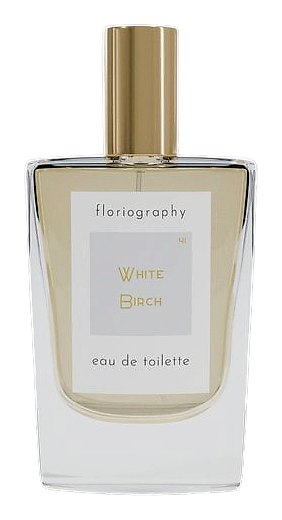
No. 41 White Birch joins Floriography's numbered library as an entry in pure wood, one of the house's most elemental compositions. The fragrance is named White Birch Avenue, evoking a walk through pale-barked trees under wide, open sky. Jo Shaw composed it in 2024 as a study in what happens when you strip a scent down to its barest materials and let the architecture do the work. No sweetness to lean on, no spice to carry the drydown. Just air, resin, and wood doing what they do in the forest without anyone watching.
What makes No. 41 interesting is its restraint. Floriography built a catalogue that runs from Old Bookstore to 852 Concrete, compositions soaked in mood and narrative. This one resists that instinct. The structure is almost diagrammatic: an airy top that functions more as atmosphere than as note, a woody heart built around cedar and dry woods, and a base where sandalwood and vetiver hold the door open. Where the brand's other entries often tell a story, this one is more of a clearing. The trees are the story. The air is the story. You walk through and come out smelling like the path.
The evolution
On skin, No. 41 opens with a cool, almost mineral haze, the airy accord and five-needle pine reading like winter air pulled through an open window. There's a green snap early, a suggestion of crushed needles, but it doesn't linger. Within 15 minutes the wood takes over. Cedar arrives first, dry and architectural, then a deeper dry wood note that fills the midphase like a second skin. The drydown is where the fragrance settles into its longest chapter: sandalwood carrying warm and creamy, vetiver keeping the underside dry and earthy, and a faint resinous sweetness that stays close to the skin for hours. It doesn't project far after the first hour. It doesn't need to. The sillage collapses inward, and what remains is a clean, slightly creamy wood with just enough green at the edges to remind you it started somewhere cold.
Cultural impact
No. 41 sits in an interesting corner of the woody fragrance conversation. It doesn't have the smoky depth of an oud-forward composition or the sweetness that most modern woody releases lean on. That's the point. The composition stays cool and structural where others go warm and rounded, and that contrast gives it a particular kind of presence. The Nordic-forest framing connects it visually to a broader current of minimalist woody releases, but the structure stays more architectural than atmospheric. It reads as a study, not a statement.