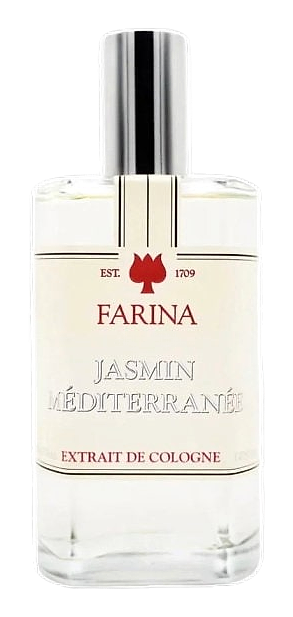
The Story
Why it exists.
The beginning
Louise Farina reached for the Mediterranean, but not the postcard version. Jasmin Méditerranée doesn't chase the white floral sweetness that dominates most jasmine-led launches. Instead, it leans into the plant's greener, leafier, more garrulous side, the jasmine that climbs stone walls in August heat, tangled with basil and fig. The perfume belongs to Farina's Série Extrait de Cologne, a 2026 release from a house whose first Eau de Cologne was created back in 1709. The composition's clarity comes through in every accord, from the cold burst of the opening to the softer warmth that follows. This is a jasmine that knows how to stay light on its feet, that prefers the vine to the vase, the living plant to the dried bouquet. There's nothing muddled about it, nothing heavy.
Tomato leaf anchors the composition with a sharp, vegetal green that most florals wouldn't dare include. It sharpens the jasmine's softness, gives the fig something to push against, and keeps the basil from reading as kitchen-counter herbs rather than perfume. The leaf note brings a vine-ripe quality, something almost agricultural, that grounds the whole composition in a specific place and light. The heart pairs Jasminum grandiflorum with sambac, two species listed together in the formula.
The evolution
The opening is a herb garden in motion. Bergamot cuts in cold and bright, basil arrives green and slightly peppery, and tomato leaf does something specific: it adds a vine-ripeness that reads more like sun on skin than like salad. The opening feels almost culinary, like crushed leaves between your fingers. Then the jasmine takes over, and the entire composition pivots. The basil recedes but doesn't disappear, leaving a green ghost in the background. The fig sweetens, not sugary, but the milky, almost lactonic sweetness of ripe fruit warming in your hand. Grandiflorum deepens the heart, lending that famous indolic whisper, while sambac keeps things luminous, almost orange-blossom-adjacent at the edges. As the hours pass, the composition thins out gracefully, losing its top notes one by one until only the base remains.
Cultural impact
Jasmin Méditerranée wears its heritage lightly. The composition doesn't reach for the heavy orientals or baroque florals that often signal legacy status. Instead, Farina releases something that reads as contemporary, a green floral built around vegetable notes and milky fig rather than the expected jasmine-and-amber template. It sits in an interesting gap, refined enough for the Rhineland tradition, transparent enough to feel current. Wearers describe it as the scent of someone who knows exactly which terrace they're sitting on, who has chosen a specific corner of the garden and committed to it.