The Story
Why it exists.
The beginning
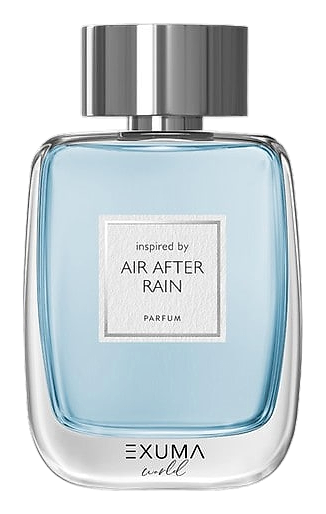
Maxime Philippe designed Air After Rain in 2020, not as a concept, but as a weather event. The name came first. The question was simple: what does the air actually smell like after rain stops? Not petrichor as abstraction, but the specific, contradictory sensation of wet earth warming in sudden sun, of the world exhaling. Philippe built the fragrance around that moment of recalibration, the hour when humidity still clings to the air but the sky has cleared. Peach and tangerine open like the last light through breaking clouds. Green notes hold the middle ground, grounding the sweetness in something mineral and alive. The drydown belongs to the earth beneath the wet ground, patchouli, cedar, moss. The fragrance is a weather report. Optimistic, but earned.
The note structure is unusual for a fragrance that wears this cleanly. Most compositions commit to one register, bright and citrusy, or warm and woody. Air After Rain threads both. The opening is almost aggressively fruity: peach and tangerine arriving together, sweet and slightly artificial in the best way, like biting into fruit that's been sitting in warm sunlight. But the green notes arrive within minutes, not as a bridge, but as a counterweight. They're earthy, slightly metallic, that crushed-leaf quality that makes rain smell like rain and not just wet pavement. The heart leans powdery: violet, iris, and rose in soft conversation.
The evolution
The opening hits fast, within thirty seconds, peach and tangerine surge forward with an almost candy-like brightness. It's aggressive. Some reach for the bottle to spray less next time. But then the green notes arrive, and everything recalibrates. The sweetness doesn't disappear, it gets complicated. Within ten minutes, the composition has shifted: the fruit is still there, but it's breathing now, mixed with something cooler, wetter, more interesting. The heart phase arrives around the thirty-minute mark. Violet emerges first, powdery, slightly sweet, with that characteristic iris-like root depth underneath. Rose joins quietly; it's not the star here, more a supporting character that keeps the florals from feeling too precious. The composition stays close to the skin throughout the heart phase. No projection push, no sillage surge. Just a quiet, certain presence that rewards proximity. The drydown is where the name pays off. Cedar arrives first, warm and slightly resinous.
Cultural impact
Air After Rain occupies a specific niche: the post-storm fragrance for people who don't want to smell like a storm. It's not aquatic in the traditional sense, no ozone, no seawater. Instead, it captures that hour after rain when the world feels scrubbed clean but the air still clings with humidity. The independent American market has embraced this kind of atmospheric storytelling, but Exuma's execution here is more restrained than most. This is for someone who wants to smell like they just stepped outside, not like they're trying to.