The Story
Why it exists.
The beginning
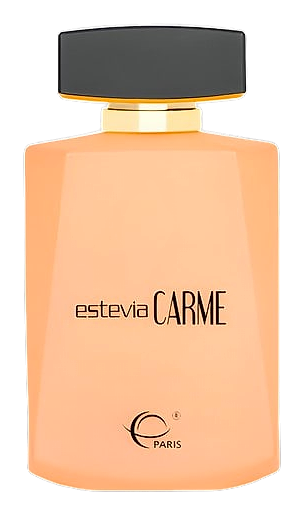
Carme draws from Greek mythology, a nymph, daughter of Zeus and Io, a figure whose story moved between divine and mortal. That sense of something between registers, neither fully one thing nor another, runs through this fragrance. Estevia built its identity on names that mean something before the scent arrives: Myrina, Elpis, Carme, Erinys. Each one carries narrative weight before a single note reaches the skin. Carme is the house's expression of that principle, a scent named for a story, not a sensation.
The composition reflects this dual nature. Carme belongs to the chypre family, that historic structure of citrus, rose, patchouli, and musks that shaped feminine perfumery through the mid-twentieth century. But Estevia's version doesn't lean into chypre's classic severity. Instead, it softens the architecture. Orange blossom replaces sharp lemon. Tonka bean and vanilla add gourmand warmth where the original would have kept things austere. The patchouli remains, but gently, present in the foundation rather than loud in the heart. It's chypre for someone who wants the structure without the sharpness.
The evolution
Carme opens with bergamot and orange blossom in equal measure, neither leading, both arriving together. No sharp citrus bite here, the bergamot reads more like morning light than lemon zest, and the orange blossom keeps it soft from the first breath. The heart arrives quietly. Rose and mimosa unfold together, the rose not sharp but warm, the mimosa adding a honeyed quality that softens what could have been a traditional floral moment. Patchouli appears here too, but in its gentlest form, more whisper than statement. The drydown is where Carme becomes itself. Vanilla rises first, then tonka bean joins with its characteristic coumarin sweetness. White musk wraps around everything, creating a close, intimate aura. Vetiver adds just enough earth to keep it grounded.
Cultural impact
Carme arrived in 2014 as Estevia Parfum brought a design-forward approach to Middle Eastern perfumery. The fragrance occupies an interesting space between classic chypre structure and modern gourmand warmth, appealing to collectors drawn to structured florals with accessible drydowns. Its emphasis on bergamot and orange blossom reflects a broader trend in regional perfumery toward bright, citrus-anchored compositions. The vanilla-tonka base signals a departure from traditional regional preferences toward sweeter, more Western-influenced aesthetics.