The Story
Why it exists.
The beginning
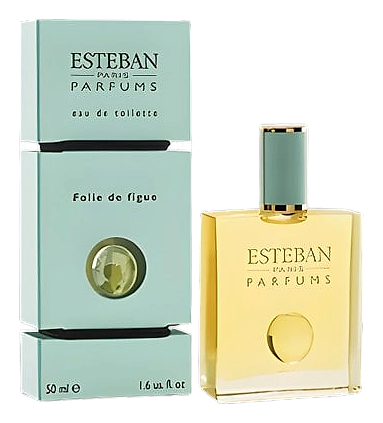
Folie de Figue arrived in 2007 from Esteban, the French house rooted in Southern France. The name says everything: folie means passion, and fig is the Mediterranean fruit that grows wild along dry stone walls, its leaves heavy with milky sap, its fruit splitting with sweetness in late summer. Esteban wanted to capture something specific, not the candied fig of synthetic accords, but the whole tree. Leaves, wood, fruit. The green and the warm. That duality is the whole point.
What makes Folie de Figue interesting is the fig material used three times across the pyramid. Fig leaf opens sharp and green, almost aquatic, that milky, slightly bitter quality that reads as fresh rather than sweet. The heart brings white fig, rounder and fruitier, softened by orange blossom. Then fig wood bark returns in the base alongside cedar, creating a warm wooden drydown that keeps the fragrance grounded long after the green top notes fade. It's a fig tree understood as architecture, not just one note stretched across the pyramid.
The evolution
The opening hits fast and green, fig leaf crushed between thumb and finger, bright citrus flashes, then a herbal turn from the bay leaf that surprises. That medicinal green quality lasts maybe ten minutes before the orange blossom softens it, adding a quiet floral hum to the green. By the second hour, the wood arrives. Not dramatic wood, fig bark, cedar, something sun-warmed and close. The drydown is intimate, barely projecting, a whisper of warm wood on skin. On fabric it lingers longer, maybe 4-5 hours. On skin, closer to 3 hours. The next morning? A faint cedar warmth. Nothing bold. Just the memory of afternoon shade.
Cultural impact
Folie de Figue arrived in 2007 during a wave of fig-focused fragrances that reshaped how Mediterranean landscapes were translated into scent. The early 2000s saw a surge of fig interpretations, but most leaned sweet and fruity. Esteban's 2007 interpretation took a different path, emphasizing the herbaceous, green qualities of the fig tree rather than the fruit itself. This positioning placed it among a smaller group of fragrances treating fig as a woody, aromatic material. The scent emerged from Southern France, where fig trees are embedded in regional identity, particularly in Provence and along the Mediterranean coast. Its discontinuation has made it a collector's item for those seeking fig's less-sweet expressions.