
The Story
Why it exists.
The beginning
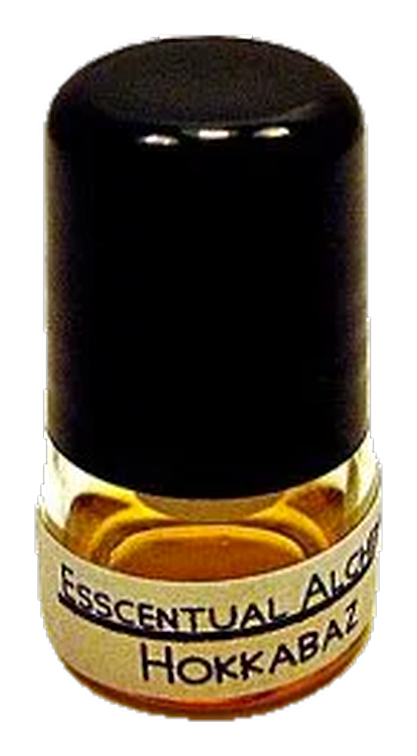
Amanda Feeley founded Esscentual Alchemy as a vehicle for small-batch natural materials, and Hokkabaz, named for the Turkish word meaning conjurer or street magician, embodies that philosophy entirely. The fragrance was conceived as an attempt to bottle the mystique of desert magic: the idea that a skilled practitioner can make the improbable feel inevitable. Released in 2012, it carries the raw, uncompromising character of materials sourced for their integrity rather than their ubiquity. The unisex oriental structure gave Feeley the framework to work with animalic and resinous materials at full strength, without the softening that commercial formulations often require.
The choice of leather and civet as leading notes reflects Feeley's commitment to materials with genuine character rather than polite substitutes. Civet, in particular, is a challenging ingredient that many perfumers soften or omit; here it is used at a level that gives the fragrance its distinct identity. The supporting notes of vetiver, patchouli, and oakmoss reinforce this earthiness, creating a composition that reads as natural rather than constructed. Sandalwood and vanilla serve as the bridge between the fragrance's harder opening and its eventual warmth, while orris root and calamus add an aromatic complexity that rewards close attention.
The evolution
The journey of Hokkabaz begins not with prelude but with declaration. Leather and civet emerge together, creating an opening that is simultaneously raw and warm, animalic and inviting. Within the first hour, vetiver and patchouli join to deepen the smoky, earthy character while clove introduces a dry spice that keeps the blend from becoming overly sweet. Orris root provides a quiet counterweight, its powdery violet-like quality softening the sharper edges. Rose appears intermittently, a subtle floral whisper that catches the light against the surrounding density. Vanilla steadily gains presence through the middle hours, tempering the spice and animalic elements with a creamy warmth that eventually becomes the dominant impression. Sandalwood and oakmoss anchor the entire arc, providing a woody, slightly mossy foundation that carries the fragrance into its final form. The overall arc moves from animalic assertion to earthy complexity to warm, lingering woodiness, with each phase lasting long enough to be fully appreciated.
Cultural impact
Hokkabaz draws on a long tradition of spice trade that shaped societies across the Middle East and Mediterranean. The blend of clove and other warm spices echoes historic markets where merchants exchanged aromatic goods, influencing culinary and ceremonial practices. By invoking these notes, the fragrance pays homage to the cultural rituals of hospitality and celebration, where scent played a role in welcoming guests and marking special occasions. Its modern interpretation bridges past and present, allowing wearers to experience a sensory link to centuries of shared heritage.