The Story
Why it exists.
The beginning
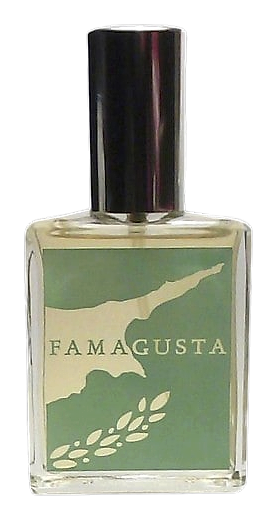
Famagusta is a city in Cyprus, part ancient walled fortress, part modern coastal town. The name carries weight: medieval walls, Mediterranean heat, the specific silence of old stone meeting warm sea air. Erik Kormann has built a house around these kinds of moments, snapshots of time and place, each fragrance a diary entry rather than a statement. Famagusta arrived in 2014 as part of a small cluster of releases that year, alongside Borobudur and Dezember. Where those leaned toward geographic and seasonal specificity, Famagusta captures something harder to place: the feeling of a walled city holding centuries of sun, salt, and silence. The fragrance doesn't try to bottle a postcard. It bottles the atmosphere, the particular quality of light that hits limestone at noon, the way green things push through stone, the persistence of sweetness against all that mineral weight.
What makes Famagusta interesting is the way it holds two impulses in tension. The sweet acacia, a white floral with a honeyed, almost dewy quality, opens the composition with a lightness that feels almost transparent. But the oakmoss is the real protagonist. It doesn't arrive quietly; it takes its time, but when it fully establishes itself, the character of the fragrance shifts from floral to something older, greener, more atmospheric. The tonka bean in the heart prevents this from becoming a purely austere chypre. Its subtle vanillic warmth softens the edges just enough.
The evolution
The opening is the acacia, sweet, translucent, a little dewy. Not heavy. More like honey suspended in cool morning air than a floral bouquet. It lasts maybe thirty minutes before the green elements begin to assert themselves, and once they do, the character shifts. Oakmoss doesn't arrive all at once. It builds. The first hour is the transition zone: green becomes damp, the mineral quality deepens, vetiver's earthy-smoky character emerges. The sweetness doesn't disappear, it recedes, becomes a memory rather than a statement. This is where the fragrance earns its chypre credentials. The oakmoss is doing real work here, creating that characteristic mossy, slightly bitter, deeply atmospheric quality that defines the style. By the third hour, the drydown begins its long approach. Tonka bean introduces itself as a soft warmth, a hint of sweetness that tempers the green. Cedar and patchouli arrive to anchor everything, dry wood, earthy depth, a base that stays close to the skin but lingers with real persistence. The final hours are quiet.
Cultural impact
Famagusta sits quietly within the niche landscape, appealing to collectors who appreciate classical chypre structure executed with restraint. It's not a fragrance that dominates conversations, it's one that earns recognition from those who notice. The limited-release model and modest distribution through select European boutiques have kept it from broader awareness, but for those who find it, it tends to reward sustained wear.