The Story
Why it exists.
The beginning
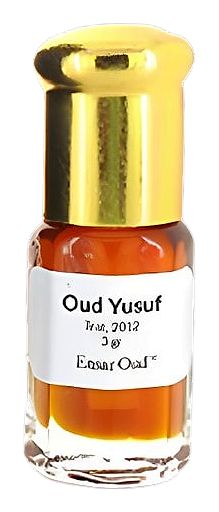
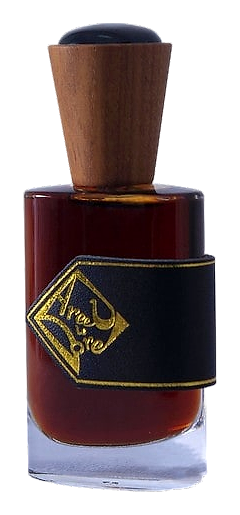
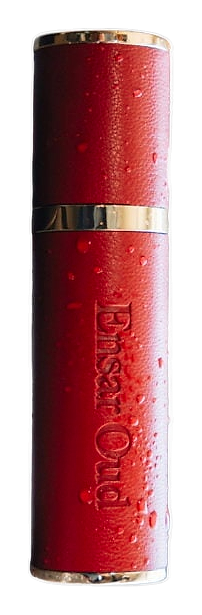
Rouge de Johor takes its name from Johor. Ensar Oud has built the brand around natural oud materials, drawing from regional supply networks across Southeast Asia to source agarwood for distillation. This particular release features Malaysian oud oil among its core notes. The name suggests a geographical lineage, a connection between the composition and the territory whose material carries the architecture, with citrus and tobacco adding texture from the broader palette. Released as a limited production run, Parfumo notes the production was apparently discontinued, making existing bottles something of a closed chapter rather than an ongoing offering in the catalog.
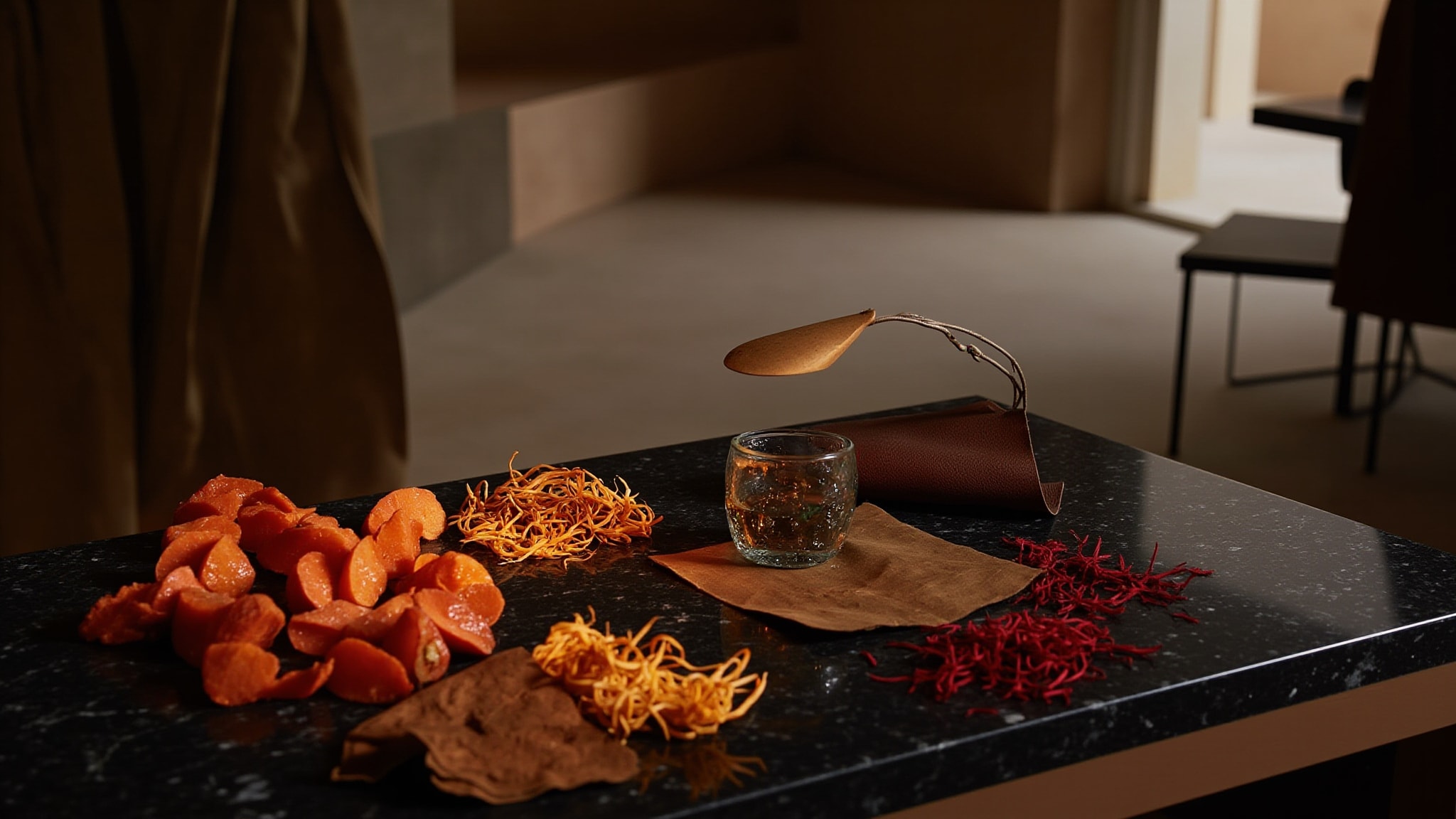
What makes this composition worth attention is how it handles the interplay between its elements. Rouge de Johor lets the fruit lead. Red mandarin and saffron open loud, beeswax smooths the edges, and the Malaysian oud sits underneath as gravitational pull rather than foreground. It's a citrus-and-oud structure that lets the fruit breathe without losing the resinous gravity that makes natural oud worth the price of admission. The mandarin doesn't behave like a fleeting top-note cameo; it persists long enough to challenge the typical assumption that oud compositions must be somber affairs.
The evolution
The opening minutes feel almost like a different composition. Mandarin pops bright, almost candy-like, and the saffron underneath reads warm and slightly bitter. There's a moment early on where you might wonder if this is really an oud composition at all. Then the beeswax arrives. It thickens everything without dulling it, adding a golden waxy smoothness that bridges fruit and resin. Tobacco folds in quietly not long after, adding a dry leafy quality that catches the saffron's spice and amplifies it. Eventually the Malaysian oud settles into the base like it was always there. It doesn't roar. It hums. A low smoky-resinous current under everything that came before. The citrus fades gradually but never quite disappears, leaving a faint reddish tinge at the edges. In the later hours, what's left is mostly oud and beeswax: warm, waxy, faintly fruity underneath.
Cultural impact
This is a composition that knows what it wants to be. The citrus presence gives it an openness that heavier compositions often lack, letting the Malaysian oud breathe in a way that feels less cloistered than typical resin-led work. The interplay between red mandarin, saffron, beeswax, tobacco, and Malayan oud produces something that reads as cohesive rather than as a stack of separate notes. For anyone interested in how regional oud materials can be shaped into compositions that don't default to darkness, this offers a useful point of reference.