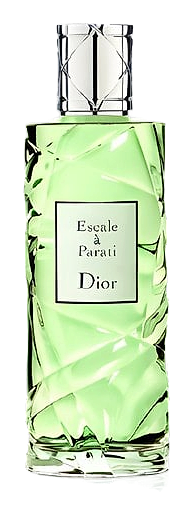

The Story
Why it exists.
The beginning
François Demachy found Parati on Brazil's Green Coast, a historic town near Rio where color saturates everything, the ocean, the colonial architecture, the light itself. Dior's Les Escales de Dior collection sent him to coastal destinations with a brief: translate the energy of a place into something you can wear. Parati delivered. The fragrance captures that vividness, the citrus brightness of a place where the Atlantic breeze cuts through tropical heat, where red berries grow wild and mint thrives in the humidity. Demachy built this around an unusual pairing: mint and red berries alongside tropical woods, creating something that feels both escapist and polished rather than generic summer fare.
The tonka bean base is where Dior's hand shows. Parati's warmth could have gone sweet, syrupy, the kind of tropical fragrance that smells like a poolside cocktail. Instead, the tonka bean adds a powdery, slightly sweet drydown that lingers close to the skin for hours. It's the finish that separates this from a generic beach scent. The mint in the heart is the other unexpected choice, aromatic and cool, it could have read clinical, but Demachy balances it with red berries and rosewood, giving it warmth underneath. The result is a fragrance that smells like Parati: bright, colorful, alive, but never overwhelming.
The evolution
The opening hits immediately, citrus brightness from bitter orange, lemon, and petitgrain creating that coastal morning freshness. Within minutes, the mint arrives cool and unexpected, with red berries adding a juicy sweetness that tempers the mint's sharpness. The rosewood brings a warm, exotic woodiness that bridges the top and heart notes seamlessly. The drydown is where tonka bean takes over, sweet, powdery, intimate. This is the payoff: something that lingers close to the skin for hours afterward, subtle but persistent. It's the finish that makes you want to spray again.
Cultural impact
Escale à Parati arrived in 2012 as part of Dior's Les Escales de Dior collection, which reimagined the classic Cologne concept through a luxury travel narrative. By centering each fragrance on a coastal destination rather than a synthetic concept, Demachy positioned these scents as aromatic postcards, a move that aligned with the era's growing luxury tourism market. The Brazilian coastal town of Parati, once a Portuguese colonial port and now a UNESCO World Heritage preservation zone, provided cultural gravitas beyond typical beach-fragrance clichés. The fragrance's blend of bitter orange, mint, and tropical woods reflected a broader early-2010s trend toward gourmand-citrus hybrids, yet its tonka bean base kept it distinct from pure citrus statements.