
The Story
Why it exists.
The beginning
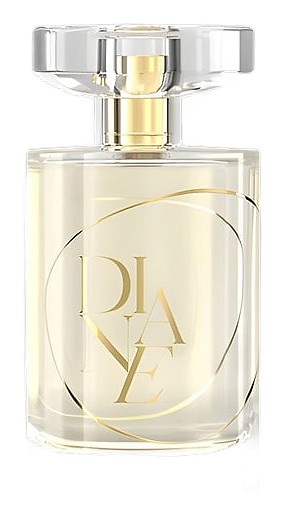
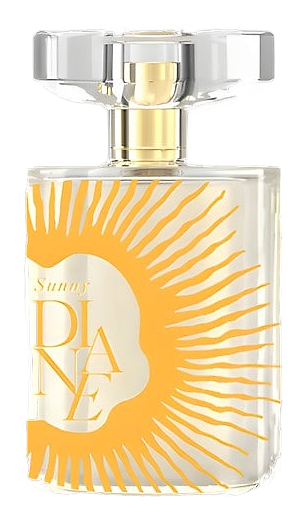
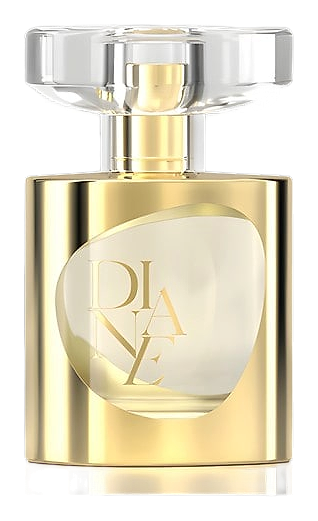
Diane von Furstenberg entrusted the creation of her signature fragrance to perfumer Aurélien Guichard with one guiding principle: no fruit. The composition would be built as a floral woody, anchored in two elements that represent deliberate contrast, frangipani blossoms and violet. The result captures something powerful and seductive without aggression, working through tension rather than volume, cool floral meeting warm tropical cream, held together by earthy patchouli and resinous myrrh. "I wanted to put the power of women in a bottle," von Furstenberg said at the launch.
The structure hinges on a direct confrontation between two floral elements that typically occupy different worlds. Violet carries cool, almost powdery precision, the crushed-petal character of a classic chypre. Frangipani brings tropical lushness, a creamy headiness that contrasts sharply with violet's refined edge. Rather than layering sequentially, with one element fading as the other arrives, these two materials interweave throughout the heart of the fragrance.
The evolution
The opening arrives with violet's cool crispness, almost green, like crushed stems rather than just petals. Within minutes, frangipani softens the edges, introducing tropical creaminess that rounds the composition into something warmer. The handoff isn't sequential so much as simultaneous; the warmth doesn't replace the cool, it just layers beneath it. By the heart phase, patchouli and myrrh arrive with earthy resin, deepening the structure while violet persists as a powdery thread. Musk adds softness, a closeness that stays near the skin. The drydown belongs to patchouli and myrrh together, warm and balsamic, with violet fading last, still detectable as a whisper long after the initial application, lingering close to the wearer in a way that reveals itself only to those standing nearby.
Cultural impact
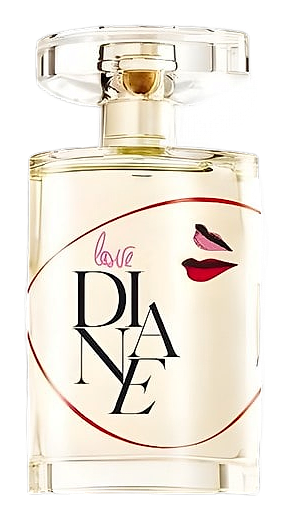
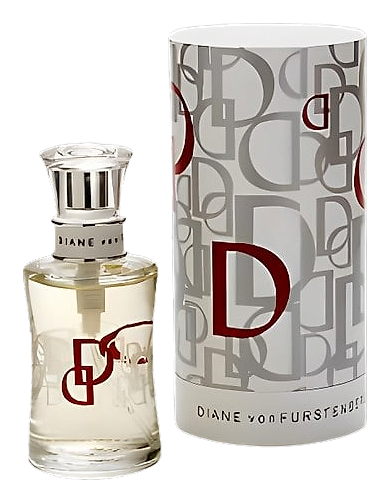
Diane arrived in 2011 as part of a DVF fragrance collection spanning four decades, from Tatiana in 1975 through Volcan d'Amour in 1981 and D in 2003. The classification as a floral chypre places it within a tradition of feminine fragrances, with powder-forward character that gives it a distinctive voice within that lineage.
The House
Diane von FurstenbergDiane von Furstenberg built one of fashion's most recognizable empires on a single silhouette. The wrap dress, introduced in 1972, became synonymous with a certain kind of confident femininity, selling millions and earning a permanent place in the wardrobes of working women. Beyond fashion, the DVF brand encompasses a fragrance collection that began with Tatiana in 1975 and expanded over decades to include Volcan d'Amour (1981), D (2003), and several additional flankers. The brand maintains licensing partnerships for its fragrance development, working with industry partners to translate its fashion identity into scent. DVF products reach consumers through department stores, specialty retailers, and the brand's own retail channels. The company remains headquartered in New York City, continuing the vision of its founder who rose from European aristocrat to American fashion force of nature.
The Creator
Aurélien GuichardAurélien's style could be described as refined and elegant, with a focus on natural ingredients. He often uses roses, a nod to his family's history, but he isn't limited by tradition.