The Story
Why it exists.
The beginning
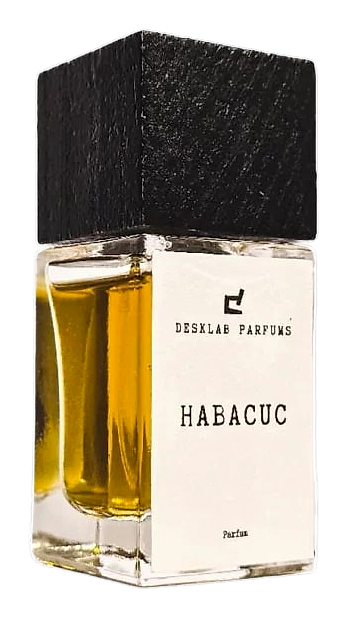
Habacuc began with a passage. Ángel Ríos, the nose behind the composition, found himself reading one of his favorite texts and something in the language of it stuck. Then olive tree absolute entered the picture, and the composition built itself around that single material. The green, slightly fatty quality of the olive tree absolute became the gravitational center, with the rest of the materials orbiting it like footnotes to a text already written. There was fruit in it, but not the tropical kind. Ríos built an entire fragrance around that single note, letting the rest of the materials orbit it. The name Habacuc arrives with a weight of its own.
Olive tree absolute carries its own weather. You get the fruit, but also the bark, the dust of the grove floor, and a lactonic creaminess that reads closer to skin than to leaf. Pairing it with sheep's wool absolute and hay absolute pulls the composition into a territory that smells of open fields and stored harvests, while Peru balsam and tolu balsam add a dense warmth underneath. Cypress and ebony darken the edges, turning the brightness of the fruit toward something almost mineral. Cardamom CO2 gives it bite, a cold metallic flicker against the green.
The evolution
The opening brings the olives, fig, and grape forward, all green and slightly oily, like crushing leaves between your fingers on a hot day. Cardamom CO2 cuts through early with a sharp, almost metallic spice that keeps things from going soft. Cypress absolute arrives alongside, adding a resinous backbone that makes the whole composition feel grounded rather than fruity. As the hours pass, lavender absolute and jasmine settle into the middle, dusty and herbal, while hay absolute gives the drydown a sweet, sun-baked quality. Peru balsam, tolu balsam, and the sheep's wool absolute turn warm and golden, slightly animalic, with a softness that settles into the skin. The oud and patchouli stay quiet but present, anchoring everything in dark wood. On fabric the next morning, you get mostly the wool and the balsams, soft and intimate, like a coat that's been left near a fireplace.
Cultural impact
Habacuc reaches for something older than tropical fruit. Where the broader fragrance conversation often defaults to clean citrus or sweet gourmand territory, this composition sits firmly in the pastoral, with olive groves, hay fields, and resinous woods doing the heavy lifting. It shows a perfumer willing to work with materials that most houses avoid, from sheep's wool absolute to olive tree absolute, and to let those unusual choices drive the entire shape of the fragrance.