The Story
Why it exists.
The beginning
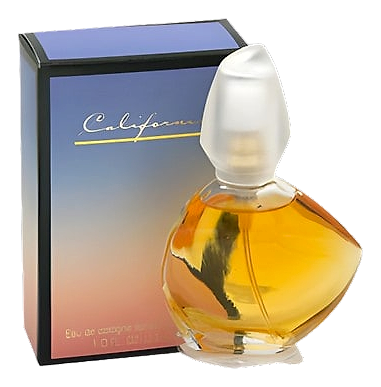
Dana launched California in 1989 with a different ambition. While the house had built its reputation on bold oriental statements, Tabu leading the charge, California was about capturing something wider. The name carries it: open windows, beach air, the long light of a California afternoon. The 1989 launch date is telling. This was the tail end of an era when perfumers still believed fragrance could hold an entire mood of a place, not just a collection of notes. Dana looked west instead of east, toward the Pacific instead of the orientals that had defined the house, and built a fragrance that smelled like the feeling of heading somewhere warm when the rest of the world was still grey.
What makes California work is a specific tension, aldehydes lifting against oakmoss grounding. The aldehydic opening is unmistakably vintage, that soapy champagne quality that reads as glamorous rather than sweet. Below it, oakmoss gives the powder and florals an edge. It's the naughtiness in the nice, the detail that keeps this from being a simple sunny scent and turns it into something with actual character. The florals in the heart don't compete with the aldehydes. They arrive after, taking over the space the initial brightness has cleared. By drydown, the composition has earned its powder.
The evolution
The opening is bright and fizzy, aldehydes and citrus doing exactly what they should, cutting through air and announcing arrival. It doesn't stay sharp. Within minutes the harshness softens and a soapy aldehyde emerges, pretty and present. The transition into the heart is where California earns attention. Florals bloom over wood, over lavender that anchors the middle section, while oakmoss keeps the powder and florals from floating away entirely. The beauty is in the contrast, soft and dirty, polished and grounded. The drydown is powder-dominant, a vanilla warmth that smells like skin-warmed fabric and lasts well into the evening. Eight to ten hours on most skin, with a ghost still detectable the next morning on fabric.
Cultural impact
California arrived at the end of the 1980s, when the decade's power fragrances were beginning to exhaust themselves. It offered something different: the house's signature sensuality reframed as something airy and luminous, with aldehydic lift giving it a sophistication that kept it from reading as purely casual. The strong sillage and powdery drydown gave it staying power in memory even after application. Today it occupies a quiet position among vintage collectors, a fragrance people remember from childhood and return to, finding in the oakmoss and aldehydes something the modern market largely abandoned.