The Story
Why it exists.
The beginning
Sultan Safran represents a different direction for the house. The fragrance opens with citrus brightness before revealing a heart where spice and florals intertwine. Saffron threads through the composition, bringing warmth that sits close to the skin rather than projecting outward. The woody base provides structure without heaviness, woods that feel present without overwhelming. The name carries weight: sultan speaks to richness, safran to the historic value of the spice itself. Here, that richness is experienced as intimate warmth, a scent that lingers without announcing itself, present without ever becoming overwhelming.
The structure of Sultan Safran handles saffron with particular care. The saffron note serves as a connector between the citrus opening and the woody base, a transition that often proves difficult in perfumery. Too much saffron can tip the composition toward the medicinal; too little and it fails to register at all. Here the saffron reads as warmth rather than sharpness, its floral facet prominent without becoming intrusive. Cinnamon leaf and nutmeg add weight to the heart, keeping it from floating entirely into florals.
The evolution
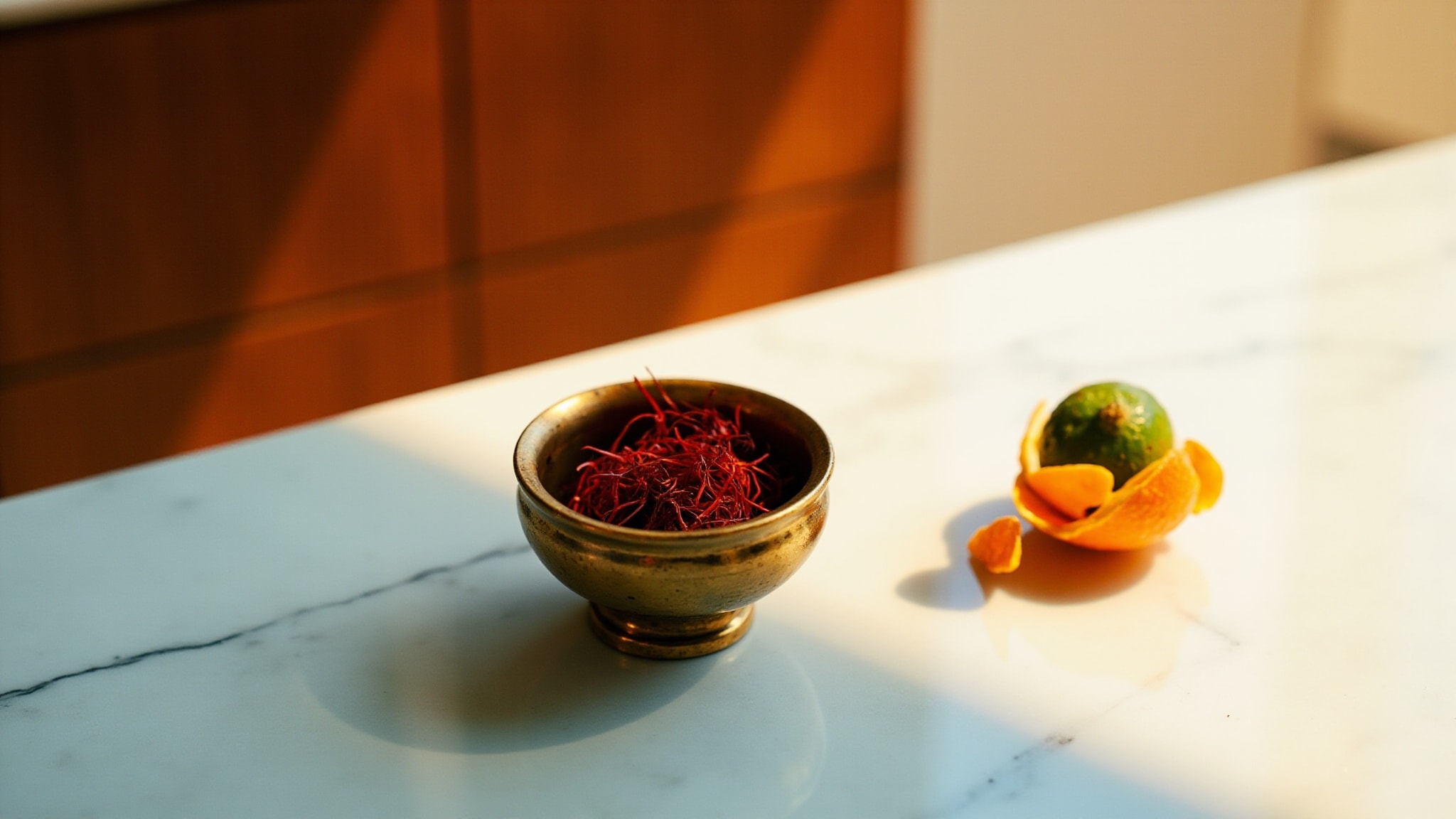
The opening arrives bright and clean: bergamot and green mandarin orange make their presence felt, the citrus reading sharp before gradually giving way to the heart. The saffron asserts itself with quiet confidence, not dramatically but with a clarity that makes it clear this is the focal point of the fragrance. Cinnamon leaf and nutmeg add warmth, rose and jasmine keep the florals present without allowing them to dominate. By the second hour, the spices begin to settle and the woods arrive. Cedar provides a clean, structured base while patchouli adds earthy depth beneath. Musk holds everything close to the skin, creating warmth and presence without projection. The drydown unfolds over several hours, intimate and warm, a scent that rewards close contact rather than announcing itself from across the room.
Cultural impact
Released in 1996, Sultan Safran offered something different for those who appreciated warmth but wanted less overt sweetness. The fragrance moved from sweeter compositions into warm spice territory, a shift that felt unexpected given the house's established character. It occupied unusual ground among its era's releases: woody oriental enough for autumn, quiet enough for daytime, warm enough for evening. The fragrance found its audience among those seeking something more grounded and structured than typical tropical scents, a scent suited to cooler evenings rather than bright afternoons.