The Story
Why it exists.
The beginning
Sophie Chabaud built her house on simple pleasures, milk, biscuit, chocolate, the kind of aromas that don't need explanation. But Vert d'Eau marked a turn. Not away from memory, but into it: the resurrection of nature in spring, the first green after a long grey stretch. The name itself is a declaration, vert meaning green, d'eau meaning water, the color of new growth and the clarity that follows rain. This was the maison stepping out of the kitchen and into the garden, finding that edible and alive aren't opposites.
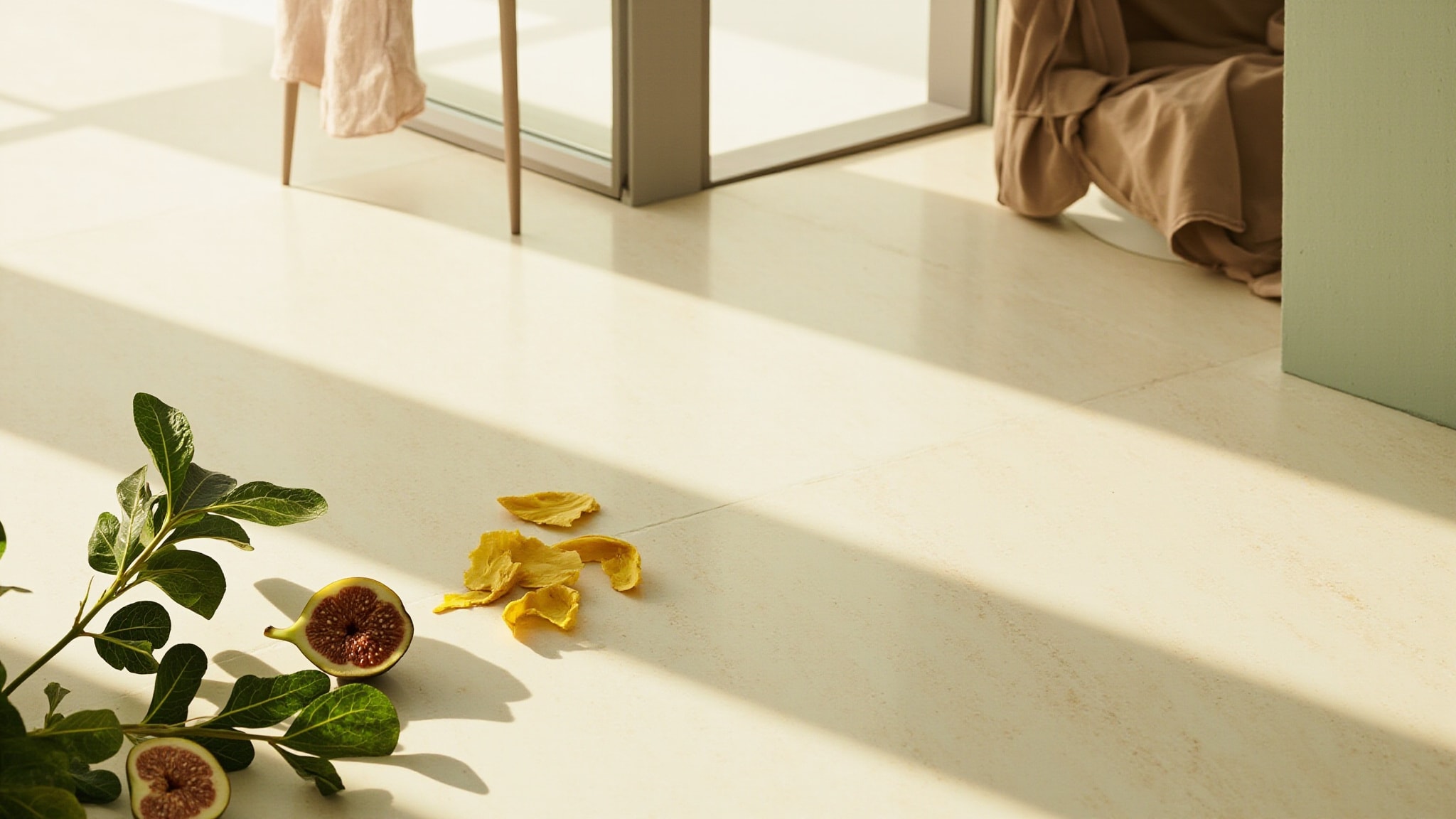
What makes the composition work is the tension between tart and creamy. Lemon zest, mandarin orange, peach, that's a fruit bowl, bright and uncomplicated. Then fig leaf arrives and shifts everything. It's not a gentle leaf. It has bite, sappiness, that green-vegetal edge that makes you smell it rather than just notice it. The white flowers don't try to compete. They soften. They wait. By the time cedarwood and white musk arrive, the fragrance has traveled from sharp to rounded, staying close to the skin all the while. It's a three-act structure that knows when to exit.
The evolution
The first fifteen minutes are all citrus, lemon peel first, then mandarin, a brief flash of peach. You smell it, you smell spring arriving. Then the fig leaf takes over, pushing the fruit aside with something darker, greener, more interesting. This phase lasts roughly two hours. The white flowers arrive quietly in the second hour, blending into the green rather than blooming above it. By hour three, cedarwood and white musk are all that remain, close to the skin, almost a memory of the fragrance rather than the thing itself. On clothing, the cedar holds longer, sometimes into the next day as a faint woody warmth.
Cultural impact
Citrus-forward fragrances like Vert d'Eau represent a significant shift in how modern perfumery approaches accessibility and everyday luxury. These bright, optimistic scents broke from heavy florals and orientals that dominated previous decades, offering a fresh alternative for consumers seeking something different. The rise of such fragrances coincided with changing attitudes toward fragrance as a daily ritual rather than a special occasion luxury. In contemporary culture, scents like this have become associated with self-care routines and personal branding, particularly among younger consumers who view fragrance as an extension of their identity.