The Story
Why it exists.
The beginning
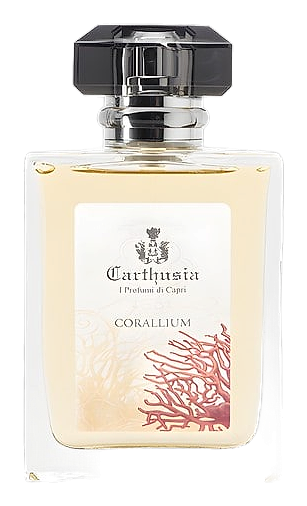
Corallium arrived in 2010, composed by Laura Bosetti Tonatto for Carthusia. The name comes from the Latin for coral, a direct reference to the Mediterranean seabed and the brand's island home. Capri sits surrounded by water, and the house has always treated that proximity as material rather than backdrop. Where most fragrances treat marine notes as a gimmick, a synthetic ozonic accord that fades in minutes, Corallium makes salt part of the structure. The citrus opens bright and immediate, then the resinous materials take over, carrying the composition forward in a way that feels rooted rather than fleeting. It's a fragrance built for the island's contradictions: sun-warmed stone, cold water, herbs growing wild between cliffs. Tonatto worked with bergamot from Calabria alongside mandarin and myrrh, an unusual pairing at the opening that creates immediate depth before the woody heart arrives. The herbs and resins aren't decorative.
The structure rewards patience. That opening citrus doesn't disappear, it transforms. Bergamot reads differently against myrrh than it does against lemon or orange blossom, and the combination shifts as the composition moves through its phases. By the time cedar and patchouli arrive, the citrus has become something else: warmer, more resinous, still present but fundamentally changed. This is what Carthusia does differently from other Mediterranean houses. Most peak in the opening and fade. Corallium builds. The island's aromatic herbs, bay leaf, sage, appear in the middle and keep the composition grounded, preventing it from becoming sweet or linear.
The evolution
The first ten minutes belong to citrus. Bergamot hits sharp and bright, mandarin follows with a sweet-floral quality, and myrrh arrives as something resinous and warm underneath, a counterweight that keeps the opening from reading as merely sunny. This is the phase most people notice first. It's also the shortest. Thirty minutes in, the citrus begins to recede and woody notes take over. Cedar arrives cleanly, carrying a dry pencil-shaving quality that pairs with patchouli's earth. The sage emerges here too, slightly camphorated, green, a little bitter. It keeps the composition from becoming sweet or linear. This is the heart: aromatic, woody, less immediately charming than the opening but more complex. By the second hour, resins begin asserting themselves in the base. White musk softens everything that came before. The drydown isn't a disappearance, it's a settling. Sage and white musk carry the final hours, and what lingers is warm, clean, and slightly herbal. On fabric, the entire arc replays at lower volume. The next day, white musk is still there.
Cultural impact
Corallium sits in a specific corner of the market: woody-aromatic-citrus with resinous depth. It's the kind of composition that appeals to people who find most fresh fragrances too linear. The myrrh and patchouli give it weight without heaviness, enough presence for evening, clean enough for daytime. The Carthusia audience tends to be people who found the brand through research rather than retail presence. They're not looking for a statement fragrance. They're looking for something that feels considered, something that has a point of view. Corallium delivers that. It's not trying to compete with heavier niche releases or mass-market fresh scents, it occupies its own territory and does so quietly.