
The Story
Why it exists.
The beginning
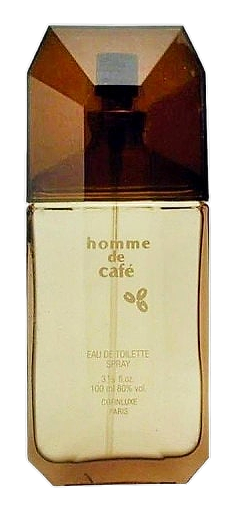
In 1978, Alberto Morillas created Homme de Café for Cafe Parfums, a French house with a name that promised nothing fancy. The brief was simple: a fragrance that worked without demanding attention. Bergamot and orange opened bright and clean, while clove leaf and carnation leaves added warmth without heaviness. Cedar and musk formed the base, grounding without weighing down. The result was a scent that smelled like confidence without trying.
What makes this composition interesting is the heart Morillas chose. Carnation leaves bring a green, almost peppery quality that most perfumers skip. Clove leaf adds warmth without the blunt force of actual clove. The raspberry doesn't sweetnessbomb, it threads through the carnation, keeping the heart from reading too medicinal. It's a quiet complexity. Nothing shouts. But pull apart the layers and there's more going on than a casual sniff would reveal.
The evolution
The opening is all citrus, bergamot and orange arriving clean and direct. No hesitation. Within minutes the carnation leaves emerge, green and slightly spiced, followed by clove leaf warming the transition. The raspberry adds a subtle fruity thread that prevents the heart from going heavy. Then the cedar arrives, dry and woody, with musk settling underneath like a quiet bass note. By hour three, the composition has flattened into something close to the skin, warm wood and skin-musk, present but no longer conversational. It doesn't transform dramatically. It just persists, moderately, for six to eight hours on most skin types.
Cultural impact
Homme de Café has accumulated a small cult following over nearly five decades, not for hype, but for reliability. Wearers describe it as the scent of someone who walks into a room and doesn't need to announce themselves. It performs consistently across seasons, though it reads warmest in cooler weather. The carnation-clove heart gives it personality without drama, which makes it stand apart from both the fresh-aquatic modern mainstream and the heavy chypre tradition of its era. It occupies a middle ground, warm enough to matter, light enough to wear daily.