
The Story
Why it exists.
The beginning
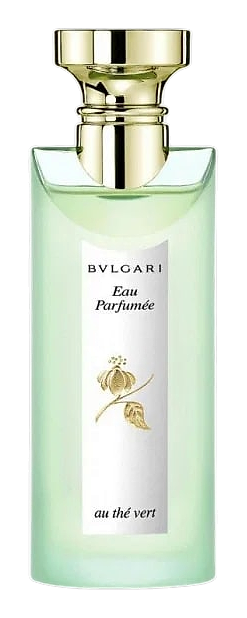
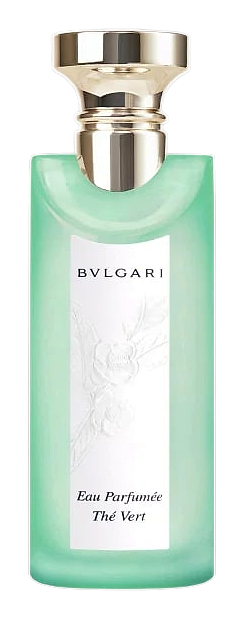
Bvlgari's Eau Parfumée au Thé Vert returns in a 2025 Eau de Toilette reissue, handed to perfumer Jacques Cavallier-Belletrud. The brief here is deceptively narrow: three notes, one mood, no ornament. Green tea, bitter orange blossom, bergamot. The challenge isn't building complexity. It's making restraint feel like a statement. Cavallier-Belletrud treats the tea leaf as architecture, not accent, and lets everything else orbit it. What sets this composition apart is how the three notes behave less like a pyramid and more like a triangulation, each one defining the space between the others. The bergamot provides the bright, almost toasted citrus edge that lifts the whole structure off the skin.
Green tea as a fragrance note is a translation problem. The leaf itself barely smells of anything once brewed, so perfumers build around the idea of tea, the steam, the tannic bite, the vegetal green. What makes this composition interesting is its refusal to fake depth. The bitter orange blossom does quiet heavy lifting here, adding a soapy, honeyed counterpoint that keeps the tea from reading flat. It's a minimalist composition that earns its minimalism. The interplay between the three notes reveals itself slowly.
The evolution
The opening is all bergamot, sharp and bright, the kind of citrus that hits before you've even brought your wrist to your nose. Within ten minutes the orange blossom starts threading through, softening the citrus edge into something warmer and slightly soapy, the way orange blossom always carries that faint hum of honey underneath its green. By the thirty-minute mark the green tea arrives properly, not as a single note but as a feeling, vegetal and tannic and clean, like the aftertaste of unsweetened matcha. The drydown is where things get interesting. The citrus lifts off entirely, and what's left is this soft, almost musky warmth that stays close to the skin. The orange blossom and the green tea remain, now quiet enough that they fuse into something you feel more than detect.
Cultural impact
Thé Vert stakes its claim in its refusal to complicate the brief. Where many compositions stack ingredients to achieve depth, this one holds to three and trusts the air to do the rest. It wears like an intentional pause, the fragrance equivalent of choosing linen over silk. The appeal lies in what it leaves out: no base notes heavy enough to anchor it, no projection loud enough to announce your arrival. Instead, it offers a kind of olfactory quietness that has become its own luxury, the kind of restraint that reads as taste rather than as absence.