
The Story
Why it exists.
The beginning
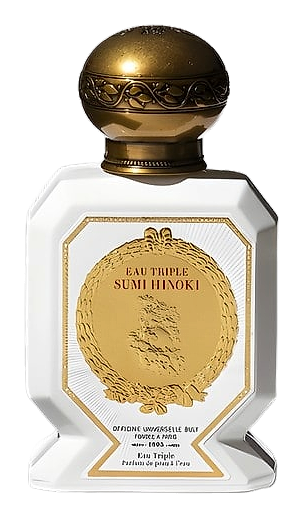
Buly 1803 named this one for a place, not a feeling. The scent conjures the visual language of smoke and scorched timber, drawing on the flame-charred temples and lacquered black surfaces where smoke has long been part of the atmosphere. The fragrance belongs to the Eau Triple line and draws its imagery from Shôno, a station along the Tōkaidō road, where the poet Matsuo Bashō once passed and the wooden structures themselves become part of the perfume's logic. The composition reads like a landscape painting done in carbon: cypress smoke, frankincense, the medicinal green of camphor dissolving into the dark. Buly names materials. Here, the imagery of smoke and stone, of wood burned and lacquered, becomes the scent itself, inseparable from the place it evokes.
Hinoki is a singular material in perfumery. The Japanese cypress yields an oil with a distinctive character, and Buly places it at the center of the composition rather than the edges. Buly pairs it with guaiac wood, which burns deep and resinous, then lets frankincense do the binding work between them. The accord is built on layered woods and resins rather than a traditional top-to-bottom pyramid. The smoky-woody signature emerges from how the materials interact, the cypress lending its dry, almost mentholated clarity while the guaiac provides a darker, denser undertone.
The evolution
The opening minutes register as almost aggressively green. Camphor and cypress arrive with mentholated force, bright enough to make your eyes adjust to the cool clarity of it. A charred quality waits underneath, not yet surfaced, just suggested. As the first hour passes, the guaiac wood begins to surface. Smoke thickens noticeably. The incense grows heavy, almost ecclesiastical, like stone walls that have absorbed centuries of candle wax and prayer. The composition darkens considerably as time progresses, settling into something denser and more contemplative. The resinous base emerges as a low hum, almost felt more than smelled, the frankincense losing its brighter edges and turning toward something more mineral and ash-like. On wool and paper, the drydown persists well past a full day, holding its shape with stubborn clarity.
Cultural impact
Sumi Hinoki earns its place through its unflinching commitment to smoke and wood. It doesn't reach for sweetness, doesn't soften its edges to court broader appeal, and doesn't pretend to be anything other than what it is: a meditation on charred cypress and resin. The fragrance appeals to those already fluent in the vocabulary of incense and wood-forward perfumery, people who want a scent with depth and specificity rather than versatility. It stands as a considered choice for colder months and quieter rooms, a fragrance that rewards attention rather than demanding it.