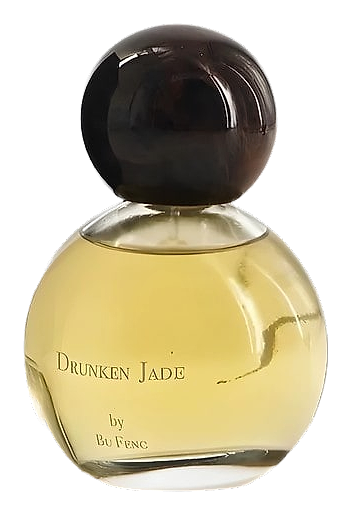

The Story
Why it exists.
The beginning
Drunken Jade takes its name from an ancient Chinese legend, and its character from a man who refused to bend. The fragrance honors Ji Kang, a Taoist philosopher, celebrated musician, and thoroughgoing rebel who lived in the third century. Historical accounts describe him as preferring the freedom of a wandering life over any appointment to the imperial court. Tales of his legendary drinking sessions describe the scene simply: when he was drunk, he moved like a jade mountain. BU FENG tasked perfumer Xiao Lan with translating that image into scent, not the literal jade, but the movement of it, the contradiction of grace under influence. The result is a fragrance built around animalic warmth and wine-like richness, meant to capture the unrestrained charm of a man who refused to pretend he wasn't exactly what he was.
What makes Drunken Jade structurally interesting is the way it refuses to resolve cleanly. The aldehydes in the opening give a metallic, almost detergent-like brightness, a curious choice for a fragrance built around grape and wine imagery, but one that works. They lift the fruit, push it skyward rather than letting it fall into sweetness. The heart pairs thyme with styrax and labdanum: an aromatic green against two resins with distinctly animalic, leathery qualities. The tension between the herb and the animalic is the engine of the fragrance's middle act. Neither dominates. The woody base, guaiac wood and cedarwood, doesn't arrive dramatically.
The evolution
The opening hits fast: aldehydes strike first, metallic and sharp, before the grape sweetness arrives to soften them. That combination lasts perhaps twenty minutes, bright, sparkling, slightly astringent. Then thyme enters. It doesn't wait politely. The bitterness of it cuts through the fruit, and for a stretch the fragrance turns herbal and almost savory. The animalic warmth of styrax and labdanum follows, adding a sticky, balsamic depth that feels warm against skin. By the second hour, the grapes have faded entirely. What remains is resinous, woody, and close. Guaiac wood and cedarwood form a low, steady warmth that holds for hours, a lingering presence that rewards patience. The sillage stays intimate rather than projecting, wrapping close to the skin as the composition settles into its quieter, more contemplative phase.
Cultural impact
Drunken Jade arrived offering something different: a fragrance whose references require cultural context to parse fully. The aldehyde-grape combination in the opening remains unusual, a pairing that few other houses have attempted. The animalic warmth of the heart adds a dimension that feels grounded and authentic rather than performative. The overall composition resists easy categorization, sitting somewhere between traditional Chinese aesthetic principles and contemporary niche sensibilities. Early adopters on fragrance communities responded to the specificity of the inspiration, the Ji Kang narrative, and to the honesty of the execution.