The Story
Why it exists.
The beginning
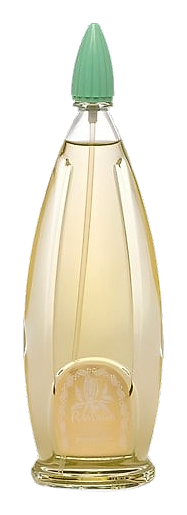
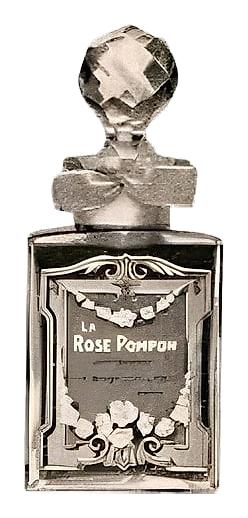
Released in 1907, La Rose Pompon arrived when Bourjois was still finding its footing as a perfume house. The early 20th century had a taste for directness in fragrance. Compositions weren't expected to layer ten notes and tell a story. They were expected to smell like one very good thing, clearly, and let the wearer do the rest. La Rose Pompon answers that brief with the most focused move possible: rose. Not rose tangled with jasmine, not rose wearing a veil of supporting accords. The flower itself, uncut, standing alone. The name itself, Pompon, carries the French sense of something full and rounded, a bloom at peak, the kind of generous fullness you see in old botanical illustrations where every petal has weight and presence.
The soliflore approach was a deliberate statement in 1907. While other houses were building increasingly complex bouquets, Bourjois chose to let one ingredient carry the entire weight. There's a quiet confidence in that, because rose is unforgiving. The quality of the absolute, the selection of the bloom, the balance of the concentrate, all become visible the moment there is nothing to hide behind. The fragrance cannot rely on supporting players to round out rough edges or stretch the composition into something fuller.
The evolution
On skin, La Rose Pompon opens with the brightest version of rose, that first cool morning when the petals still hold dew. The flower arrives lifted and almost translucent, the way a rose smells when sunlight first passes through it and the scent hasn't yet warmed into something heavier. There's an immediacy to the opening, a freshness that feels like the bloom rather than any abstract idea of rose. Nothing complicates the first impression. The flower has the room. The heart settles within the first 30 minutes, and the rose deepens from bright to full. This is where the soliflore nature becomes the point. There's nothing competing for attention, no competing accord pulling the focus elsewhere, no background players waiting to enter.
Cultural impact
La Rose Pompon sits in an unusual place in fragrance history. Released in 1907, it belongs to a moment when perfumery was still finding its modern language, before the conventions of top, heart, and base notes had fully settled into the rigid structure that would dominate much of the 20th century. Its discontinuation makes it a piece of olfactory history, a preserved example of an early approach to presenting a single flower as a complete composition. For collectors and fragrance historians, the perfume offers a window into how rose was treated in its own right, without the scaffolding that would later become standard.