
The Story
Why it exists.
The beginning
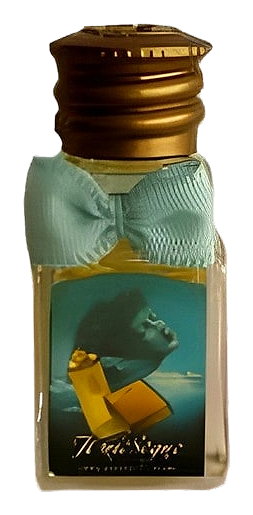
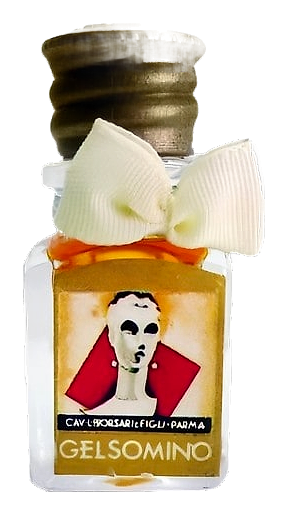
Atez arrived in 1920 from Borsari, a Parma house whose name carries a date that suggests deep roots in Italian perfumery tradition. The brand itself is described as an old Italian perfumery house, drawing on the regional heritage of Parma and the Emilian landscape. Atez sits firmly within that lineage, presenting itself as a bouquet-style floral in the classical sense of the term, where the composition is treated as an arrangement rather than a declaration. The name itself reads as Italian, economical, almost a sigh rather than a statement. What survives in Atez is the habit of an earlier perfumery: a floral conceived without a published note breakdown, presented as a unified impression that the wearer is meant to experience as a whole.
What makes Atez particularly interesting is the restraint of its official record. The description names only a bouquet-style floral, which is itself a meaningful clue. Without a published pyramid, the fragrance invites a different mode of attention. The wearer is asked to listen to what the composition actually does on the skin rather than to anticipate what it is supposed to contain. This absence of breakdown changes the relationship between perfume and person. There is no note list to confirm or contradict, no accord to verify against expectation.
The evolution
Atez opens in the manner of an old floral cologne, bright and diffuse, with the immediate impression of something freshly picked and set in water. The first thirty minutes carry that lift, a green-edged brightness that reads as stems as much as petals, giving the composition its initial architecture. As the opening thins, the heart takes over, and this is where Atez stops being a general description and becomes a specific one. The floral accord deepens, moving away from the watery brightness of the first phase and into something warmer, more powdered, with the unmistakable density of petals pressed together in a closed room. That density holds through the long middle stretch of the wear, where the fragrance lives close to the skin and behaves more like texture than like scent.
Cultural impact
Atez belongs to the early twentieth century output of Borsari 1870, an old Italian perfumery house based in Parma. Released in 1920, it sits within an Italian tradition of floral composition that predates many of the conventions now associated with the modern fragrance market. The official description offers only a brief characterization, a bouquet-style floral, and from that restraint comes a particular kind of presence. Atez survives as an example of that earlier mode of composition, presented through a unified floral accord rather than a sequence of declared stages.