
The Story
Why it exists.
The beginning
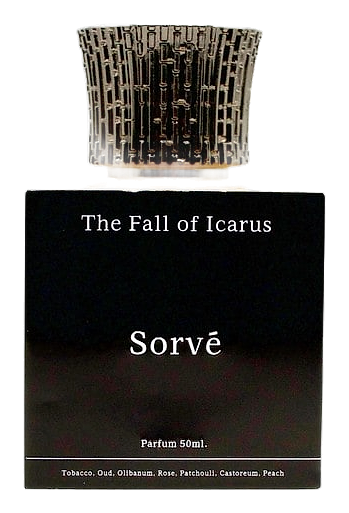
The Fall of Icarus is a 2026 extrait from the brand, composed by Hungarian perfumer Máté Benicsák. The mythological framing feels pointed: Icarus didn't fall because he flew badly. He fell because the sun was too close and he didn't look away. There's a recklessness to wearing oud this unfiltered, rose this spiced, tobacco this dry, and the name winks at exactly that. Benicsák built a composition that doesn't negotiate its presence. It opens warm, goes dark fast, and stays. The launching into 2026 marks another chapter for the house, which continues to push concentration levels and material intensity past where most contemporary lines stop playing. What you get on skin is the same refusal to soften that the mythology implies.
What separates this from the oud crowd is the doubling: Thai and Cambodian oud layered together, not blended into one anonymous mass. Each brings its own weight to the composition, and the interplay between the two creates a texture that a single origin can't replicate. Castoreum rides underneath, adding leathery, musky warmth that grounds the whole thing. The frankincense and tobacco in the middle do serious structural work. They're there to drag the composition away from sweetness and into territory that smells like a study lined with old books and a fire that won't die.
The evolution
The opening moments feel almost friendly. Turkish rose curls up with peach and cinnamon, rich enough to feel generous but accessible enough to read clearly. Then the tobacco enters and the temperature shifts. Frankincense adds smoke without fire, a church-candle resin that thickens the air. Patchouli grounds everything in earth. As the hours pass, the rose recedes and the oud takes its seat. Both ouds become fully present, playing off each other in a dialogue that holds the composition together. The castoreum makes its move later in the wear, and this is where the composition stops being a fragrance and starts being a statement. Vanilla tries to soften it. Opoponax sweetens the edges. But underneath, that castoreum-leather-animalic core holds through the full wear cycle, still present even as the top layers fade. What you're left with is a dense, skin-close warmth that rewards attention.
Cultural impact
The Fall of Icarus sits firmly in the oud-and-rose tradition, with an animalic, resinous character that places it closer to that legacy than to anything described as streamlined. The composition leans into materials that demand attention: castoreum, double oud, tobacco, frankincense, and the kind of rose that doesn't apologize for its spices. Wearers reach for it deliberately, the kind of fragrance someone chooses as a statement rather than a default. The animalic core, anchored by that castoreum warmth and the interplay between the two oud origins, gives it a feral edge that distinguishes it from more polite compositions in the same family.