
The Story
Why it exists.
The beginning
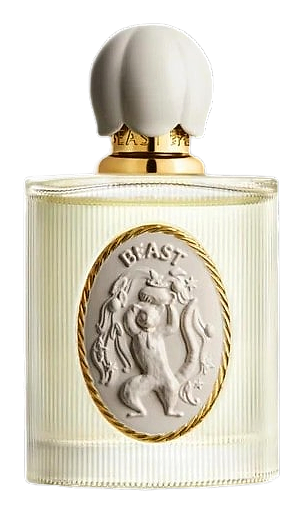
Day Dreaming takes its name from the space between thought and action, that moment when your mind drifts somewhere softer than the room you're standing in. Beast built this fragrance around a specific mood: the kind of afternoon where nothing urgent is happening and you're not apologizing for it. The green notes arrive first, cool and herbal, but they're not the point. They're the opening credits. What the fragrance is really about is what happens next, the slow turn toward warmth, the way a daydream stops being idle and becomes something you inhabit. The 2024 release translates that drift into scent, one that asks you to slow down without asking you to stop.
The pairing of green and amber is counterintuitive. Usually amber demands attention, it's resinous, sticky-sweet, the fragrance equivalent of holding up your hand. Here, Beast softened the equation. The fig leaf and ivy keep things cool, almost mineral, while the labdanum and musk underneath provide the warmth without the weight. Sandalwood acts as the translator between these two worlds, smooth and milky enough to bridge the gap. Cypriol, earthy, slightly tarry, keeps the base from becoming too pretty. It's a composition that earns its contradictions: fresh without being cold, sweet without being loud, present without being present.
The evolution
The opening hits like crushed fig leaves and green stems, vegetal, slightly bitter, with saffron adding a thread of warm spice that surprises. It's the freshest moment, but not the lightest. The amber quality builds slowly, not in a linear way, but as a rising warmth that starts in the base and works upward. The drydown is where this fragrance earns its name: labdanum and musk settle close to the skin, intimate and skin-like, the kind of scent that someone standing next to you might catch when you move. It doesn't project aggressively. It stays.
Cultural impact
Day Dreaming arrives at a moment when Chinese consumers increasingly seek emotional resonance over status signaling in luxury purchases. Beast has built its identity on storytelling that treats fragrance as a cultural artifact rather than mere perfume, and Day Dreaming extends this by engaging with Chinese poetic traditions around daydreams and nature imagery. The brand's approach, creating emotional narratives first and sourcing ingredients to match, reflects a broader shift in Chinese luxury toward authenticity and cultural depth. As domestic fragrance culture matures, releases like Day Dreaming help establish that China's fragrance market can support conceptually sophisticated work rather than simply importing Western narratives.