The Story
Why it exists.
The beginning
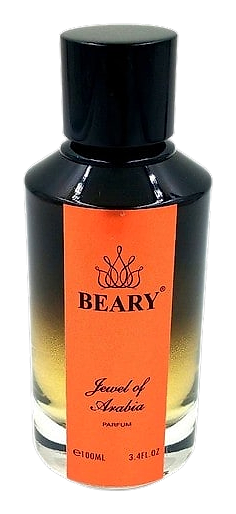
Jewel of Arabia launched in 2016 as a unisex fragrance built around a striking collision of floral softness and dark woods. Rose and praline form an opening marked by fresh-looking petals and creamy, dessert-like sweetness. Saffron and vanilla move inward, adding spice, warmth, and smooth creaminess that keep the composition from becoming too neat or too sweet. Oud anchors the base with dense wood. The listed sources place the notes differently: one identifies saffron as a top note, while another lists rose and praline at the top, saffron and vanilla in the middle, and agarwood at the base. No perfumer is identified in the available research, so the documented story begins with the name, the 2016 release reported by some sources, and the listed scent materials.
The unusual part is the balance between rose and praline. One brings a familiar floral lift; the other adds a rounded, almost edible sweetness. Saffron keeps that sweetness from becoming simple, lending it a dry, metallic heat, while vanilla turns the center creamy. Oud changes the scale again, giving the blend a darker, woody foundation. Together, these materials create a deliberately theatrical contrast: soft petals, dessert warmth, spice, and dense wood in one composition.
The evolution
The first impression is bright and rewarding, with rose and praline bringing a polished floral sweetness to the surface. Soon, saffron adds a sharper, slightly metallic warmth, while vanilla rounds the center into something softer and more substantial. The personality changes as oud develops underneath. What begins as a pretty floral-gourmand scent takes on deeper color, and the sweetness becomes less sugary, more dusky. By the drydown, the composition feels warmer and more grounded, with the woody character shaping the final impression. The materials create a progression from fresh floral brightness to dessert-like softness, spice, cream, and dense wood.
Cultural impact
Jewel of Arabia is presented as a unisex fragrance with an eastern floral classification. Its composition brings together rose, oud, saffron, vanilla, and praline, materials that can share space within a richly layered fragrance culture. The name also carries an explicit association with Arabia, while the materials create a cross-genre impression that moves from floral and dessert-like notes toward spice and dark wood.