
The Story
Why it exists.
The beginning
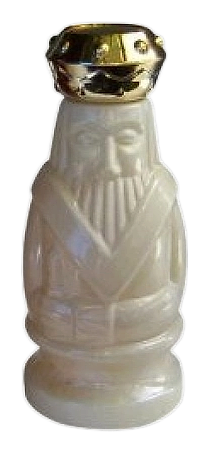
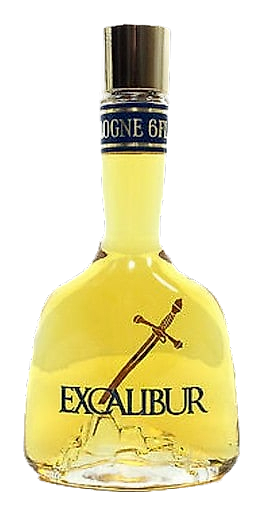
Excalibur landed in 1969. No sweetness, no sparkle. Just green herbs and wood, stripped down to the essentials. It was meant to be something a man could wear every day and not think twice about. The name carries Arthurian weight, but the scent inside is humble kitchen and forest floor, not castle halls. Avon's entry into men's cologne was unapologetically simple, refusing to dress itself up in decorative top notes or crowd-pleasing florals. What you get instead is a composition that trusts its own materials, that asks the wearer to come to it rather than announcing itself from across the room. The bottle was functional, the juice was honest, and the whole thing felt like a quiet handshake instead of a grand introduction.
Three notes make up the entire composition, and that scarcity is the point. Green Notes, Herbal Notes, Woody Notes. No florals softening the edges, no gourmand base to round it off. The result is a fragrance that reads like a single gesture rather than a layered conversation. Each note has to carry real weight because nothing else is doing the lifting. The green notes provide the first impression, sharp and immediate, the way chlorophyll has a crispness that registers before the brain even identifies what it's smelling.
The evolution
The first spray hits sharp and vegetal, like snapping a stem between your fingers. Almost medicinal in its greenness, and bone dry from the start. There's no citrus sparkle to soften the landing, no anise to warm it up. Just raw herbaceousness that sits close to the skin. As the fragrance settles, the green starts to bend. The herbal quality deepens, picking up a fuller, rounder character that grounds the sharper opening into something warmer without ever becoming sweet. The herbal notes carry the scent through its middle phase, and there's a quiet shift happening underneath, the woods beginning their slow ascent. The woody notes arrive gradually, building presence as the greens recede. The transition is smooth and unhurried, one element ceding territory to the next without any abrupt handoff.
Cultural impact
Excalibur occupies a specific place in the landscape of late-60s American men's cologne. It's part of a wave of green-herbal-woody compositions that defined a certain masculine ideal at the time, one built on dryness, simplicity, and an outdoorsy sensibility rather than sweetness or sophistication. The scent doesn't shout, and that's part of its lasting appeal. Men who reached for it tended to want something that felt honest and grounded, something that smelled like a clean shirt and fresh air rather than a boardroom or a nightclub.