
The Story
Why it exists.
The beginning
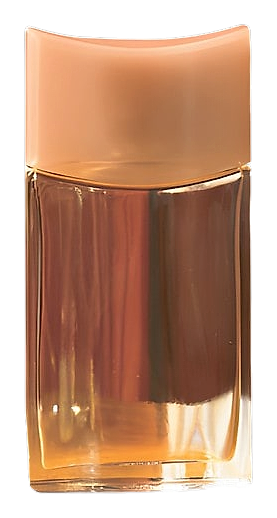
Eau Givree arrived in 1981 as Avon's answer to the growing demand for bright, easy-wearing scents that could fit into everyday life. Building on the company's heritage of community-driven fragrance, the perfume was designed to capture the crisp feeling of a cool morning. The choice to structure the scent around a single heart phase of citruses, lavender, and musk reflected a minimalist philosophy uncommon in the era. Rather than constructing a fragrance with elaborate opening and base phases, the perfumer focused on making three notes work in perfect synchronization. The result was a scent that required no wait time, no developing arc, no hidden depths to discover. It was fragrance as pure, immediate experience, designed for wearers who wanted clarity over complexity.
The philosophy behind Eau Givree reflects a specific moment in fragrance history when simplicity was a deliberate choice rather than an absence of craft. Citruses were chosen for their immediate brightness, the olfactory equivalent of cold air on a winter morning. Lavender added a layer of clean composure that kept the citrus from feeling frivolous. Musk served as the invisible hand that pulled everything close, ensuring the scent remained a personal experience rather than a room-filling statement. Together, these three notes formed a complete composition that required no support from opening or base accords. The perfume understood its own identity and refused to be anything more than what it was.
The evolution
The arc of Eau Givree is unusual in its refusal to arc. Most fragrances promise transformation, a journey from bright opening to deep base. This scent offers none of that. From the first spray, citruses, lavender, and musk exist simultaneously, sharing the stage from minute one. The citruses provide initial brightness, but lavender prevents them from becoming screechy or fleeting. Musk ensures the composition stays grounded and skin-close rather than dispersing into the air. As time passes, the citruses fade first, leaving lavender and musk to finish the experience in quieter harmony. There is no dramatic conclusion, no warm amber or sweet vanilla emerging to extend the wear. The scent simply fades when its primary notes have exhausted themselves, leaving behind only the memory of its initial clarity.
Cultural impact
Since its 1981 launch, Eau Givree has become a nostalgic staple among Avon enthusiasts, often recalled as the go‑to fresh scent of the 80s. It still pops up in vintage fragrance circles and online communities, praised for its uncomplicated charm that bridges classic Avon accessibility with a timeless, breezy character.