The Story
Why it exists.
The beginning
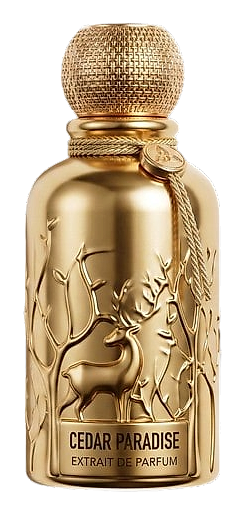
Cedar Paradise joined Auraa Desire's Untamed Collection as part of the Rasasi portfolio. The brief reads simple on paper: saffron and lavender at the top, oud and cashmere wood in the middle, patchouli and oakmoss underneath. But the execution leans into something specific, a sense of restraint that holds warmth without ever raising its voice. There is a particular discipline in how the top notes give way to the heart, how the lavender's cool clarity never overstays but hands off cleanly to the saffron's golden thread. The oud arrives with substance, not volume, a material that feels shaped rather than poured. Underneath it all, the patchouli and oakmoss work as quiet scaffolding, present in every later phase even when they can't be picked out individually.
Cashmere wood in the heart is what gives Cedar Paradise its particular texture, a softer, almost tactile dryness that rounds out oud's sharper edges without dulling them. The lavender top note has a cool, herbal clarity that feels deliberate in its placement, giving the saffron and nutmeg something to push against rather than simply decorate. As the composition moves into its middle register, the oud deepens, taking on a resinous weight that shifts and settles over the first hour. Oakmoss in the base provides a raw, green bitterness, a note that carries its own weather into the blend.
The evolution
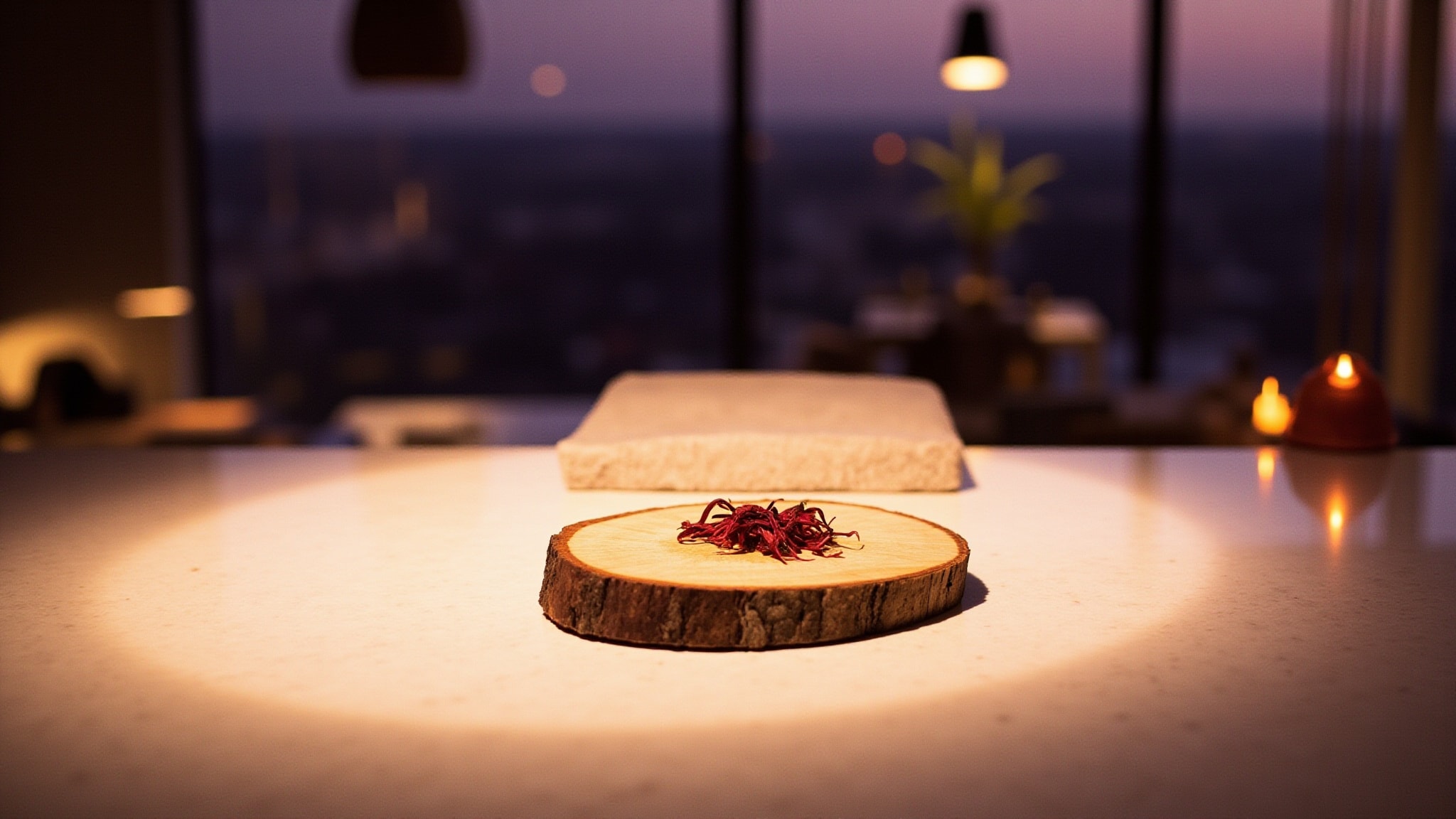
The opening is a negotiation. Lavender lands cool and slightly herbal, almost bracing, before the nutmeg steps in and the whole thing warms. Saffron arrives not as a shout but as a thread, golden and slightly bitter, weaving through the spice. As the first half hour passes, the oud surfaces, and the composition deepens into something denser. Cashmere wood keeps the edges soft, never letting the oud dominate. By the time three hours have passed, the base takes over properly. Patchouli and oakmoss settle into a mossy, earthy dryness that clings to fabric and skin alike. The musk underneath stays warm and clean, lending a quiet persistence. Six hours later, what's left on a sweater sleeve is oakmoss and amber still faintly recognizable, slightly sweet, slightly bitter, still recognizable as Cedar Paradise.
Cultural impact
Cedar Paradise entered the market as a study in restraint, pairing familiar oriental materials with a composition that wears close to the skin rather than projecting outward. The fragrance drew on saffron and oud, materials with deep roots in Arabian perfumery, but used lavender, cashmere wood, and oakmoss to shape the edges into something more understated. That approach made it a useful reference point for wearers who wanted something with regional character but without the heavier projection often associated with mainstream Arabian oud releases.