The Story
Why it exists.
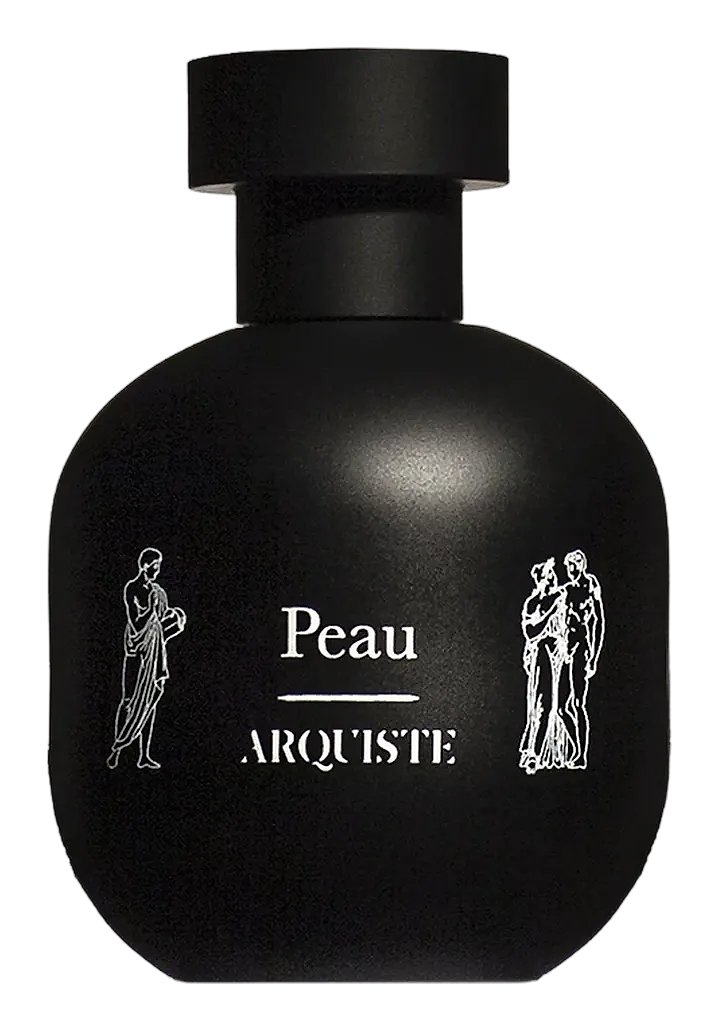
Peau arrived in 2021, developed with Rodrigo Flores-Roux, and it draws from one of history's most documented loves: the Emperor Hadrian and Antinoös. After Antinoös died in 134 CE, Hadrian commissioned thousands of sculptures to preserve his image, turning physical devotion into stone. The name lives in the word itself. Peau is French for skin. And the brand's own copy is uncommonly direct about its intent: the idealized scent at a lover, the nape of the neck, the memory of closeness. The fragrance attempts to recreate the smell of skin itself. The historical weight lingers underneath, Hadrian's obsession with preserving something impermanent, his reach for permanence through the blunt tools of creation. The scent knows it cannot truly hold onto anything. It reaches anyway.
If this were a song
Community picks
Mystery of Love
Sufjan Stevens
The Beginning
Peau arrived in 2021, developed with Rodrigo Flores-Roux, and it draws from one of history's most documented loves: the Emperor Hadrian and Antinoös. After Antinoös died in 134 CE, Hadrian commissioned thousands of sculptures to preserve his image, turning physical devotion into stone. The name lives in the word itself. Peau is French for skin. And the brand's own copy is uncommonly direct about its intent: the idealized scent at a lover, the nape of the neck, the memory of closeness. The fragrance attempts to recreate the smell of skin itself. The historical weight lingers underneath, Hadrian's obsession with preserving something impermanent, his reach for permanence through the blunt tools of creation. The scent knows it cannot truly hold onto anything. It reaches anyway.
What makes Peau work is the restraint. White pepper from India and okoumé wood from Gabon sit in the same sentence in the brand's own materials, two materials from opposite ends of the world, chosen not for exoticism but for what they do on skin. The pepper is clean, slightly salty. The okoumé is warm and woody in a way that reads as skin-like rather than forest-like. The ingredient that makes this smell like skin is used with precision, it creates a subtle sweetness with marine undertones, and it anchors the drydown into something animalic without ever tipping into raunchiness.
The Evolution
The opening is immediate. Clary sage and ambergris arrive together, herbaceous and warm, with a slight salt that reads as skin already at body temperature. There's no cold opening here. The white pepper arrives shortly after, clean and warm. Coriander seeds underneath it, adding a softness that keeps the spice from sharpening. The composition sits in this space: warm, clean, slightly animalic. Close to the skin but unmistakably present. The drydown is where it earns its name. As the top notes dissolve, the musky base deepens, ambergris and musk and the ghost of clary sage collapsing into a single impression. Labdanum wraps around the okoumé wood, adding a warm resinous quality that extends the wear significantly. What remains is skin-like in the truest sense: the kind of presence that another person only notices if they're already pressed close.
Cultural Impact
Peau occupies a distinctive position among intimate, close-wear compositions. It's compared most often to other skin-focused scents like Le Labo's AnOther 13 and Juliette Has a Gun's Not a Perfume, though Peau leans more explicitly animalic and warm than either, grounded by the ambergris and okoumé drydown. The fragrance offers a narrative dimension rooted in its inspirations, giving it a depth that sets it apart from more straightforward skin scents in the niche market.

The House
United States · Est. 2012
Arquiste is a niche fragrance house that translates moments from history into modern perfume. Founded in 2012 by Mexican architect Carlos Huber, the label pairs rigorous archival research with the expertise of perfumers such as Rodrigo Flores‑Roux, Yann Vasnier and Calice Becker. Each scent is presented as a portal to a specific time and place, from a 17th‑century French wedding to a 1930s London cocktail gathering. The brand positions itself as a bridge between past and present, inviting wearers to experience a scent‑bound narrative.
If this were a song
Community picks
Warm ambergris, soft musk, and the clean lift of white pepper, Peau sounds like a late afternoon that hasn't decided whether it's ending or just beginning. Not quite ambient, not quite acoustic. Something in between: a cello note that keeps finding its pitch, a piano that plays the same phrase twice and means it the second time. The Hadrian-and-Antinoös narrative gives it that quality of trying to preserve something impermanent, so the music should feel like it's reaching for something it can't quite hold.
Mystery of Love
Sufjan Stevens