The Story
Why it exists.
The beginning
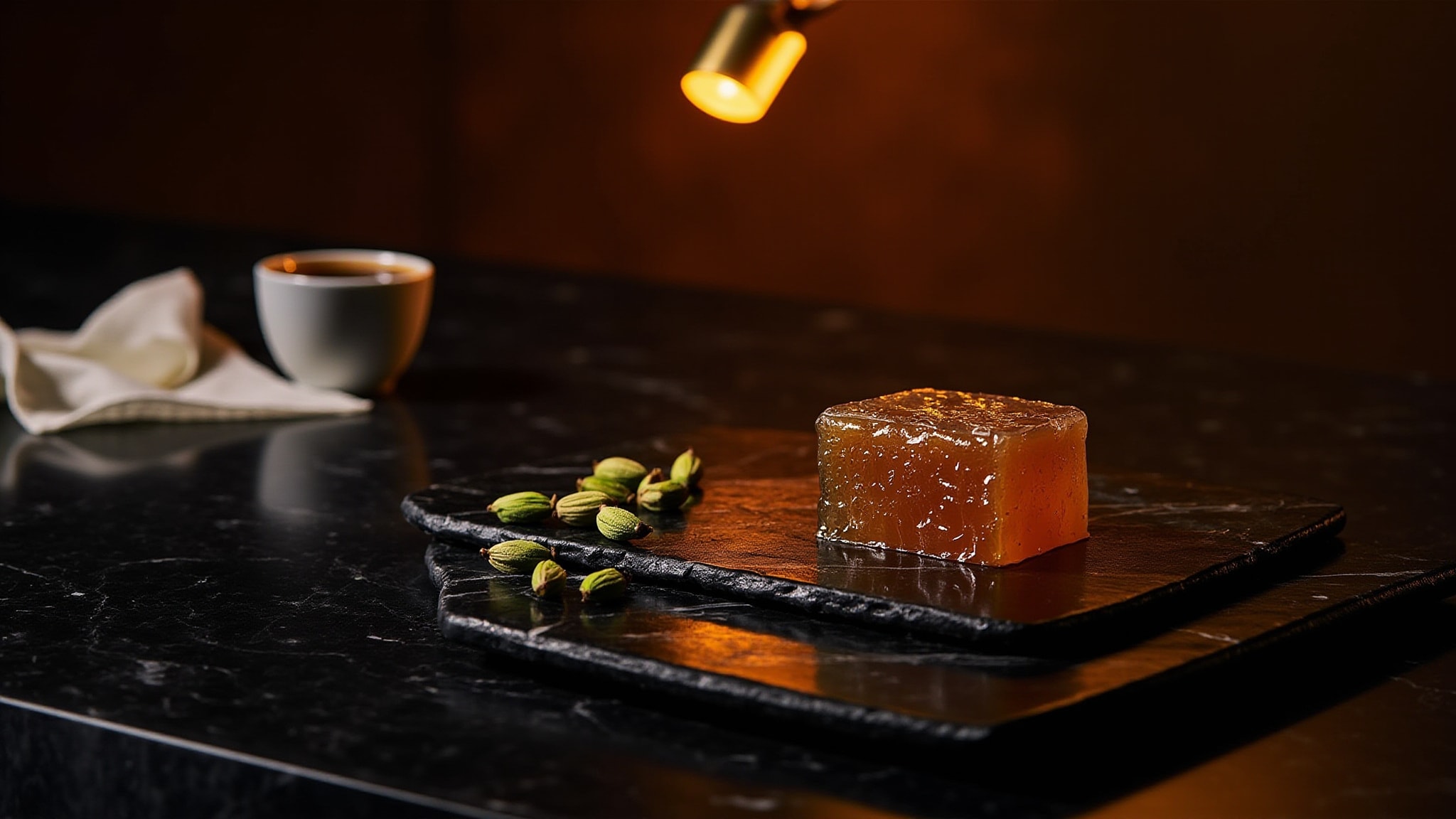
Illegal Honey started as a variation of Amarsi's Ibiza Wood. Perfumer Alessandra Castelbarco built it around a different memory: not Mediterranean wood, but the dense, aromatic air of an Indian spice market. The name carries a wink. There's nothing regulated about honey. There's nothing illicit about jasmine or cardamom. The 'illegal' lives somewhere else. It lives in how the scent makes you feel, indulgent, almost excessive. There's a particular charge in the opening, a brightness that refuses to behave politely. Cardamom cuts through honey in a way that feels almost reckless, and the jasmine underneath refuses to sit still. It keeps shifting, revealing new folds as the minutes pass.
What makes this composition interesting is how the honey is staged. Honey in fragrance often arrives as sweetness, sometimes cloying, sometimes overwrought. Here it's weighted down with frankincense and cedar, pushed back behind jasmine and ylang-ylang so it reads more as warmth than as sugar. The cardamom does the same trick at the top, prickling through citrus so the opening feels spiced rather than bright. There's restraint in how the sweetness is handled, an architectural choice that keeps the bazaar from becoming a candy shop. And the incense-honey base is a pairing rooted in centuries of ritual, from temples to markets. That historical depth gives the composition its gravity.
The evolution
Illegal Honey opens with a quick brightening, cardamom and citrus arriving without much ceremony. That opening is almost a reflex, a flash of something cool and lightly spiced before the real architecture shows itself. Then jasmine and ylang-ylang settle in, and the fragrance gets interesting. The florals here aren't airy or clean. They carry weight, a creamy density that starts to feel like warmth building under fabric. There's a sunscreen-adjacent quality to the ylang at first, something golden and almost oily, but it doesn't stay that way for long. Within the first hour, honey and frankincense begin to surface, and the composition pivots. The sweetness stays, but it's smoke now, not sugar. Incense softens everything, rounds the edges, and cedar grounds the whole thing.
Cultural impact
Illegal Honey holds an important place in Amarsi's catalog. It began as a variation of Ibiza Wood, sharing compositional ground with that earlier release while pushing in a distinctly different direction. Where Ibiza Wood leans into Mediterranean sun and dry cedar, Illegal Honey turns toward the warmth and density of an Indian spice market, trading clarity for richness. Among the house's releases, it stands out for its balance of approachability and complexity. The fragrance wears close to the skin rather than projecting widely, making it feel more intimate than theatrical. There's a restraint in how the honey is handled here.