
The Story
Why it exists.
The beginning
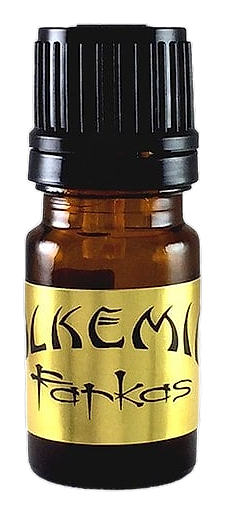
Farkas launched in 2009. The word "farkas" is Hungarian for wolf, and that's where the scent starts: not a costume, not an animalic novelty, but the lean, musky warmth that follows something wild through a cold room. The fragrance is built around two materials that don't usually share a bottle: leather and musk. Both of them speak, and neither drowns the other out. "A unisex blend of savagely sexy skin musks and deliciously sinister leathers," reads the original brief. On skin, the opening is immediate and close, the leather landing soft rather than crackled, like suede warmed by body heat rather than a new jacket still stiff from the shop. The musk follows within minutes, settling into the leather the way a hand finds a pocket, and from there the composition stays narrow.
What makes a leather-musk composition interesting is how rarely it stays interesting. Most of them collapse into one note, the stronger partner swallowing the quieter one. Farkas sidesteps that by staying narrow. Two materials. No distraction. There's no citrus to pretend at freshness, no florals to soften the edges. The composition holds its shape because both ingredients are given equal weight from the first spray. The leather has a tactile, almost physical presence, more suede than bridle, while the musk operates underneath as a texture rather than a top note.
The evolution
Farkas opens the way a second skin would: warm immediately, slightly animal, asking nothing of your nose. There's no cold entry, no bright flash. The leather arrives first, suede-soft rather than crackled, and the musk settles into it within the first ten minutes like a hand finding a pocket. There's no real phase shift here. The composition stays in the same narrow room for hours. What changes is the temperature. Around the three-hour mark, the leather dries down to something drier, more papery, while the musk deepens into a hum that sits closer to the skin. By hour five or six, the musk has the floor. The leather is still there, but faded to a quiet scratch beneath it, the way an old jacket smells after a decade of being hung on the same hook. On fabric the next morning, the musk lifts clean. The leather ghost lingers.
Cultural impact
Farkas tends to land on the radar of the self-guided buyer, someone who went looking for a leather that didn't perform leather. Wearers describe it as the kind of scent you put on and forget about until someone asks. It doesn't carry the mythology of older European leather houses, and it doesn't try to. It just works in the background for the person who wanted something leather and didn't want it to announce itself. The appeal seems to sit in its restraint: a composition that stays close to the skin rather than projecting outward, built for the wearer rather than the room.