The Story
Why it exists.
The beginning
Sharra Lamoureaux built Mesnee d'Hellequin in 2013 with something specific in mind, not a fragrance that exists in spite of nature, but one that exists alongside it. The name carries weight, an echo of old forests and older stories. She was after something untethered, a scent that resists domestication. The result smells like resinous sap and cold air, like something alive and indifferent, something that was here long before you arrived and will remain long after you leave. It's the smell of a forest that doesn't require permission to exist.
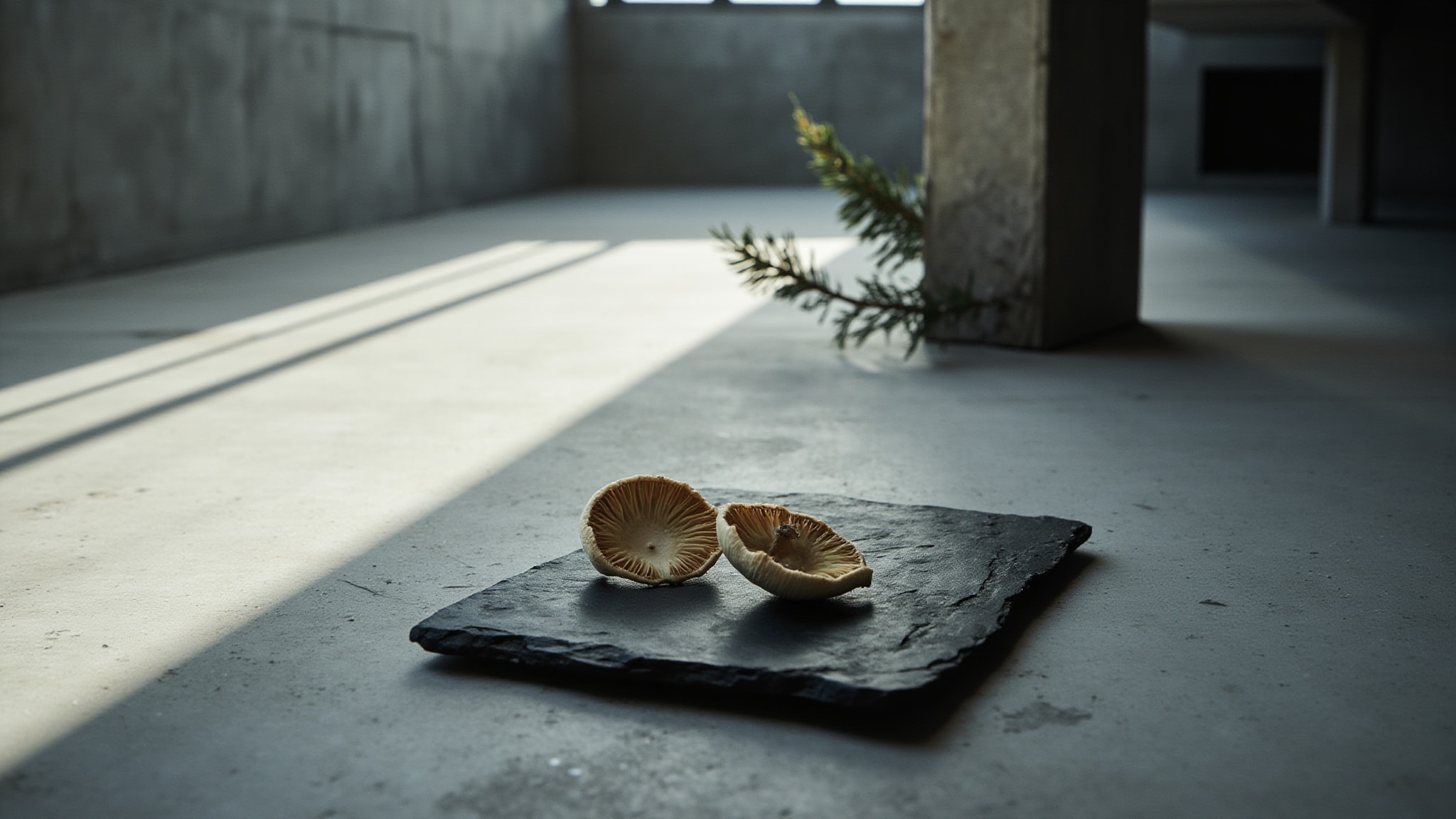
What makes this composition unusual is what sits at the base. While most woody fragrances build from bark and heartwood, Boletus edulis, the porcini mushroom, anchors the drydown here. It's earthy in the way only forest fungi can be: mineral, damp, the smell of decay that feeds new growth. Combined with lichen scraped from stone and vetiver pulled from soil, the foundation reads as terrain rather than wood. It's the difference between smelling a tree and smelling the ground it stands on.
The evolution
The opening arrives fast, conifer resin, cold balsam, a green bite from the galbanum that clears the sinuses. Twenty minutes in, the sharp edges soften as moss and lichen rise. What's left is green-waxy, the texture of leaves after rain. By the second hour, the cedar takes over, teakwood settling underneath. The mushroom note hasn't announced itself yet. You wait. The fourth hour is when it arrives, that mineral, fungal depth pushing through the wood. Vetiver and earth now, not the opening's cold. As the hours pass, the fragrance settles into something quieter and more contemplative, the forest floor emerging slowly from beneath the canopy.
Cultural impact
Mesnee d'Hellequin arrived as part of a growing interest in earthy and unconventional compositions among fragrance collectors seeking alternatives to mainstream sweetness. The perfume features Boletus edulis as a named note, reflecting a willingness to explore botanical territories often avoided by commercial houses. This choice positions the fragrance within a tradition of narrative-driven perfumes that draw on imagery of forests and folklore, offering something that feels discovered rather than purchased.