The Story
Why it exists.
The beginning
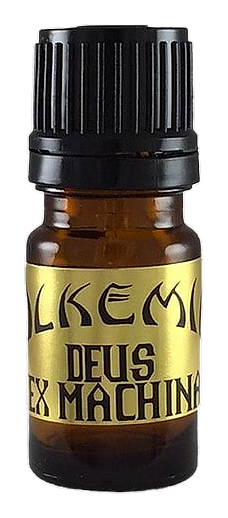
Deus ex Machina arrived in 2015 as a fragrance that asks what if industrial materials deserved the same respect as rare florals. This one takes that philosophy to an extreme. Grey ambergris, motor oil, concrete, hot iron. The official description calls it 'an olfactory portrait of industrial decay and the fallen gods of age of disruption, innovation, and technological revolution.' That's not marketing language, it's the brief. Here, the god is the material itself. These materials step in where traditional perfumery conventions typically do not, presenting themselves without apology and without the expected softening agents.
The key to understanding this composition lies in what it refuses to include. Instead, mineral clarity and a metallic sheen work alongside ambergris as the warm anchor. Hot iron and concrete are central to the fragrance, not decorative afterthoughts. The result is a scent that smells like something that exists in the world, not something assembled from a conventional approved ingredient list. The materials here are unconventional yet treated as something worth wearing, elevated from their industrial origins into a composition that demands attention.
The evolution
The opening is soft. That surprises people who expect aggression from a fragrance built on motor oil. Grey ambergris carries the initial phase, warm and slightly animalic, translucent. Then the mineral quality asserts itself. Something sharper arrives, almost electric. That's the metallic note appearing. The heart belongs to hot iron and concrete, an industrial duet. Some wearers describe it as a machine shop at dawn; others reach for the words barn and dust. Both are accurate. The drydown settles into mineral warmth. The ambergris and metallic qualities remain present but quieter, with the edge still detectable but not as pronounced. The lasting impression is mineral warmth, not comfortable in the traditional sense, but honest. It doesn't pretend to be something it isn't.
Cultural impact
Deus ex Machina sits in a space within niche perfumery that mainstream fragrance rarely explores. The house works with unconventional materials elevated to something worth wearing. For those who want fragrance to smell like the world rather than like a curated garden, this is a committed statement. It presents industrial and mineral qualities without the expected softening, making it distinctive within the independent fragrance space.