
The Story
Why it exists.
The beginning
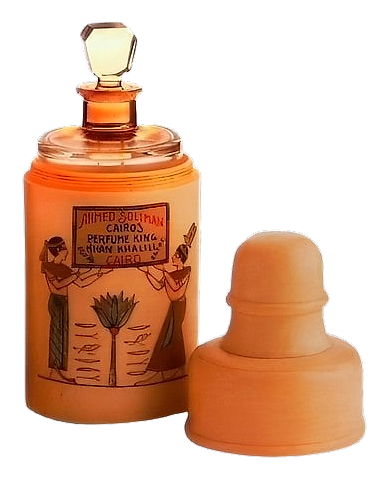
Bittersweet arrived in 1925 from the workshop of Ahmed Soliman, a perfumer whose name would come to be associated with a particular approach to composition rooted in the tension between bitter and sweet. The fragrance emerged from a moment when regional perfumery was developing its own vocabulary of contrast, where resin-heavy materials and floral notes were being set against each other rather than blended into smooth uniformity. Bittersweet sits squarely within that tradition, offering a portrait of opposition that refuses to resolve itself into something polite. It is a composition built on the instinct that fragrance communicates most clearly when its ingredients argue with each other, and the result is something that holds its shape rather than dissolving into easy agreement.
What makes the composition distinctive is how directly it confronts the paradox in its own name. The bitterness leads from the first breath, dry and unapologetic, a material presence that refuses to soften itself into welcome. The sweetness, when it arrives, arrives as something earned rather than given, and it never quite overwhelms the resinous backbone that gives the fragrance its spine. There is no attempt to reconcile the two impulses or smooth them into a comfortable middle ground.
The evolution
Bittersweet begins in something close to silence, a dry, resinous hush that settles over the skin without announcing itself. The bitterness leads, as promised by the name, dry and slightly sharp, a material presence that feels architectural rather than decorative. Nothing about the opening invites you in gently. It arrives with weight and asks you to meet it where it stands. As the composition breathes, the florals begin to surface from beneath the resin, warm and grounded rather than airy, offering a sweetness that shows up only after the bitter has made its case. The sweetness is never loud. It arrives as suggestion rather than statement, more whisper than declaration. The two forces begin to negotiate, and what emerges in the middle hours is something quieter, less imposing, a quiet accord that still carries the memory of its opening tension.
Cultural impact
Bittersweet belongs to a particular moment in early twentieth century perfumery, a time when regional houses were developing their own voices distinct from the European traditions that dominated the global market. The fragrance emerged from a workshop whose maker was less interested in courting trends than in building compositions that held their shape over time and said something specific about the materials at hand. It is a portrait of an era when perfume was still treated as a serious material craft, when a formula had to justify its existence through what it could do on skin rather than through marketing or fashion.