The Story
Why it exists.
The beginning
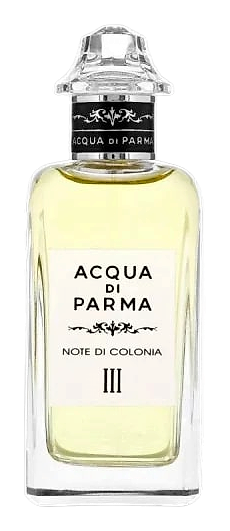
Part of Acqua di Parma's ongoing conversation with its own founding, Note di Colonia I arrives in 2016 as a deliberate reinvention. While the Note di Colonia collection takes the house's 1916 citrus blueprint and reinterprets it, Note di Colonia I places a violet note forward in the composition. Perfumer Delphine Lebeau-Krowiakj builds from the house's bergamot and neroli foundation, opening the composition to a floral heart where violet, damask rose, and lavender share equal weight. The violet adds a powdery softness that sets this fragrance apart from the house's brighter, more citrus-forward expressions. Damask rose brings a rich, romantic quality while lavender contributes an aromatic, slightly cool undertone that keeps the florals from becoming heavy.
What makes Note di Colonia I distinctive is the structural choice to foreground powder over brightness. The bergamot-neroli opening is textbook Acqua di Parma, clean, citrus, immediately Italian, but the violet in the heart shifts the composition into chypre territory. Lavender's aromatic coolness keeps the rose and violet from going sweet, while the cedar-patchouli base anchors everything in woody restraint. The patchouli here works quietly, not as a dominant force but as a supporting element that gives the cedar room to breathe.
The evolution
The opening arrives brisk and citrus-forward, bergamot bright, neroli adding a quiet floral hum. It reads clean for roughly 15 minutes before the violet begins to surface, softening the initial sharpness into something powdery and almost nostalgic. The lavender follows, adding an aromatic coolness that prevents the floral heart from becoming too sweet. Damask rose appears late in the heart phase, sweet and brief, before the cedar takes over. By the fourth hour, the composition has settled into its driest register, cedar's dry wood, patchouli's mineral whisper, a faint trace of violet powder on warm skin. The sillage drops to intimate by hour five, close enough to notice only when someone is near. On fabric, a faint trace survives into the next morning.
Cultural impact
As part of the Note di Colonia collection, Note di Colonia I occupies a specific niche within the broader Acqua di Parma lineup, for those who appreciate the house's citrus heritage but want something with more floral complexity. The violet-forward orientation sets it apart from both the original Colonia and other flankers in the collection, offering a different kind of refinement that moves beyond pure brightness.
The House
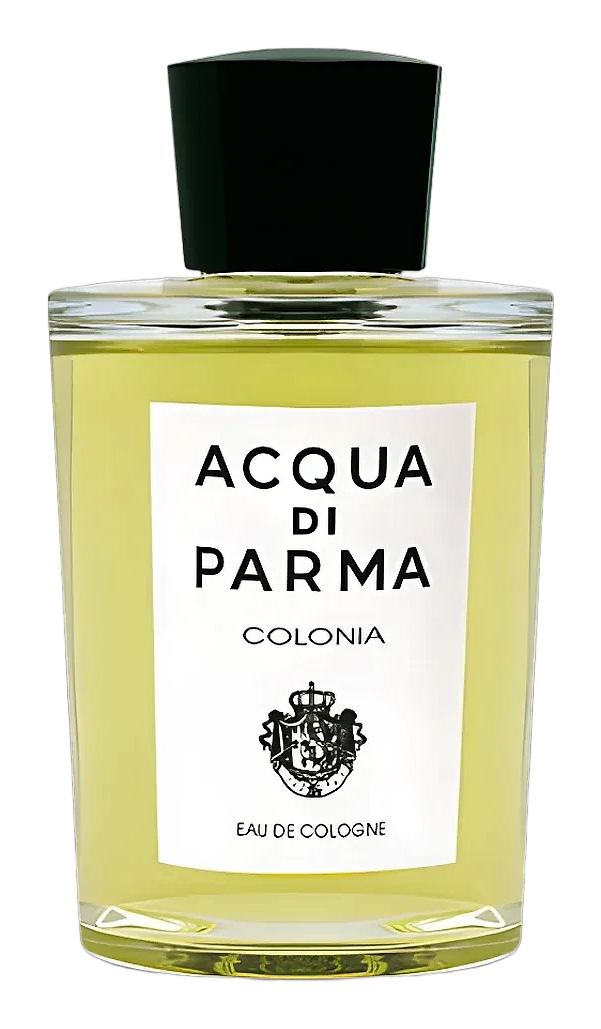
Acqua di ParmaBaron Carlo Magnani created Acqua di Parma in 1916 as his own signature scent. What began as one fragrance has become synonymous with Italian sophistication. Colonia, the house's founding creation, holds the distinction of being the first true Italian Eau de Cologne, and it remains unchanged today. Over a century later, the house still captures the essence of la dolce vita, pairing Mediterranean brightness with an understated luxury that appeals to those who prefer refinement to ostentation.
The Creator
Delphine Lebeau-KrowiakjDelphine favors a clear, linear architecture. She often begins with a dominant heart note—jasmine, rose, or a rare spice—then builds a supportive base of woods, resins, or ambergris.