
The Story
Why it exists.
The beginning
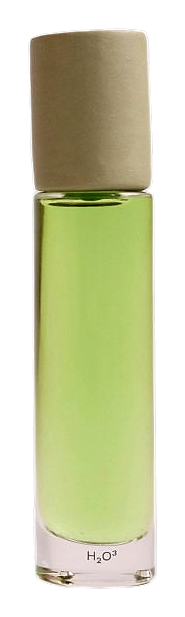
H₂O³ arrived in 2026 from 32.JULI, composed by perfumers Juli Pätzold and Maria Magdalena Stachowiak. The name itself reads as a chemical formula askew, three molecules where there should be two, and that single extra character carries the whole premise of the fragrance. It is built entirely from botanical and natural raw materials, drawing on essential oils, resins, and hydrolats to translate something elemental into scent. The cold opening reads as brine and green sap, the kind of air that clings to your clothes after walking through coastal scrub where seaweed tangles around driftwood and crushed stems release their sharp, vegetal juice. There is a mineral chill to it, something almost tidal, but the effect comes purely from natural materials rather than from synthetic marine shortcuts.
What makes H₂O³ distinctive is how the formula refuses to soften its edges. Cucumber and verjuice carry the cold opening with a mouth-puckering acidity, while seaweed lends a saline undertow without leaning on anything synthetic. That choice sets up a green architecture built from galbanum, that sharp resinous note that smells like a stem snapped clean in half, sitting alongside frankincense's clean smoke and angelica's peppery lift. The base doesn't chase warmth either.
The evolution
The opening belongs to cucumber and verjuice, cold and mouth-puckering, like biting into something unripe with the salt still on your fingers. Galbanum arrives next, sharp and green, snapping into the composition with the force of a stem broken fresh from the branch. Frankincense smokes underneath it, not heavy, more like distant brushfire carried on a wet wind. Angelica adds a celery-like pepperiness that keeps the heart honest, slightly vegetal, slightly medicinal, the kind of note that roots the green sharpness in something edible and earthy. This is the space where H₂O³ lives, in that bitter green register that community reviewers describe as plant sap and crushed stems. The base settles slowly as the composition moves downward. Vetiver brings its earthy, almost root-beer warmth, grounding the cold green with something darker and more soil-like.
Cultural impact
H₂O³ arrives in 2026 as an explicitly green-spicy botanical composition, a profile that draws vocabulary from the plant world rather than from perfumery's more familiar registers. Wearers tend to describe it using terms borrowed from botany: plant sap, crushed stems, bitter greens, and a mineral saltiness that reads as coastal rather than confectionary. The composition pulls people who treat fragrance as texture and mood, a layer of skin chemistry that operates below the level of compliment or recognition.