Jean Guichard
Born in Grasse, Jean Guichard entered the rarefied world of Givaudan's perfumery program and never really left. He rose through the house's rigorous training system, eventually directing the Givaudan Perfumery School where the next generation of noses learn their craft. His signed works read like a catalogue of commercial powerhouses: the skin-sealing intensity of Dior's Poison, the sensual heat of Calvin Klein's Obsession. Colleagues describe a man who prizes precision and discretion, who measures success not in accolades but in the longevity of a formula. Guichard built a career quietly, without fanfare, yet the fragrances bearing his name dominated their eras. At Givaudan, he shaped hundreds of perfumers, passing along techniques refined across decades of creation. His influence extends far beyond his own compositions. He is, in the most literal sense, a teacher to the masters working today.
The hits
Notable creations










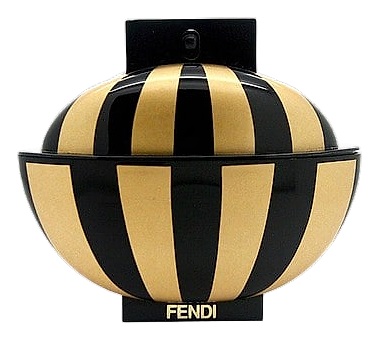

The signature
How Jean composes
Guichard's compositions share an architectural confidence. He favors density, building fragrances that feel substantial on first application and deepen over hours. His signature involves powerful contrasts: sweet against dark, fresh against resinous, the immediate versus the lasting. Whether orchestrating Poison's hypnotic indole trail or Obsession's warm Oriental sprawl, he seems to consider how a scent moves through a room, how it lingers on fabric, how it changes as skin chemistry takes hold. He works comfortably within classic perfumery structures while extracting maximum intensity from each material. Students at the Givaudan school study his approach not as a template but as proof that rigor and sensuality can coexist in a single formula. His style rewards patience; these are fragrances designed to unfold rather than announce.
Philosophy
What drives Jean
"You create perfume mentally, not with your nose." This conviction defines Guichard more than any single ingredient. He believes the perfumer's work happens in the mind first, constructing architectures that exist before any raw material touches a blotter. In his view, an aging nose loses only physical capacity; the mental construct remains intact, allowing experienced perfumers to create well into later life. He speaks of each era possessing its own great perfumes, suggesting that context matters as much as craft. A great perfumer, he argues, must understand not just chemistry but culture. His teaching emphasizes fundamentals over flash, urging students toward lasting skill rather than tricks. For Guichard, perfumery is a discipline built on accumulated knowledge, patient observation, and the willingness to let a fragrance evolve naturally under the skin.
In the same league