Watermelon Martini
Cocktail-inspired watermelon accord blending juicy fruit sweetness with a crisp vodka-like bite. A playful top note built for summer skin scents and aquatic compositions.
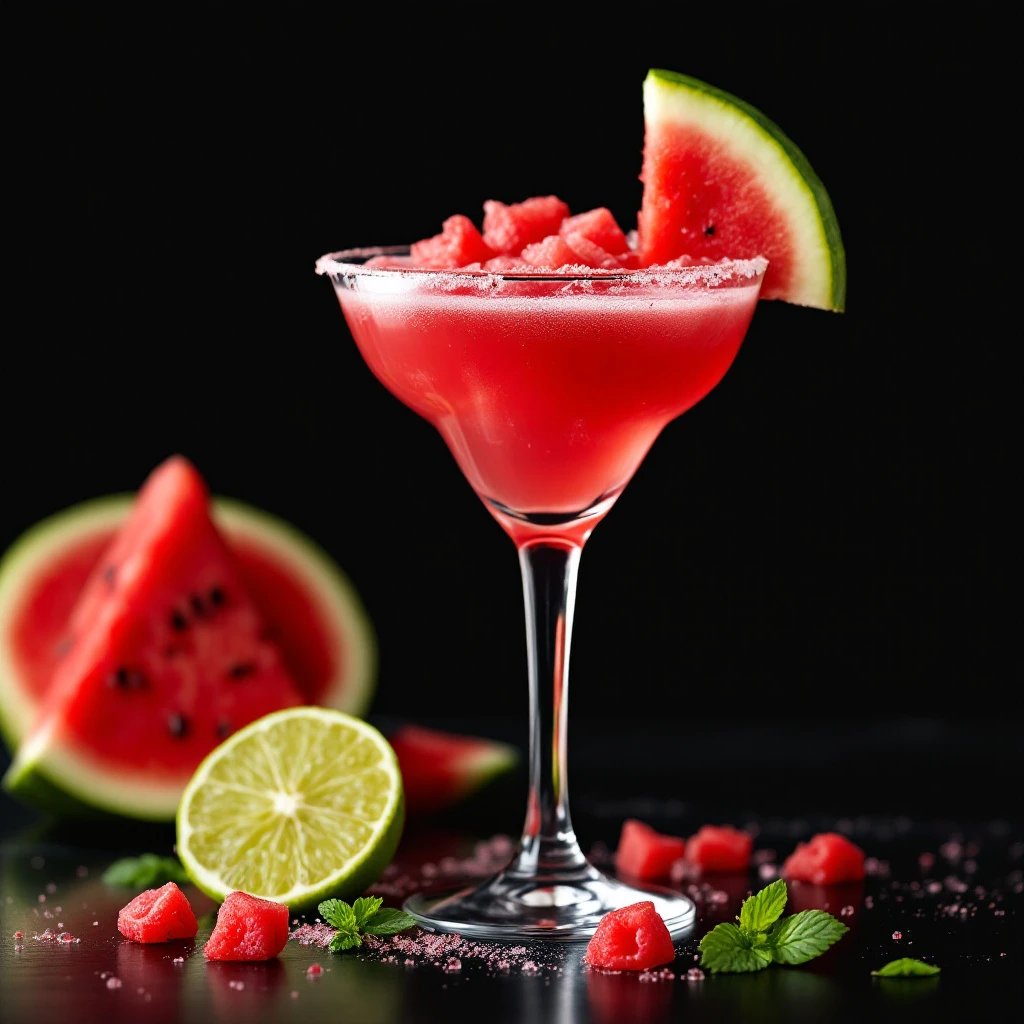
Character
How it smells
Sun-soaked cocktail meets perfumery.
Watermelon notes in modern perfumery rely on synthetic molecules rather than fruit distillate, since the fresh fruit yields less than 1% essential oil by steam distillation.
Pairs beautifully with
Origin
United States (concept origin: cocktail culture)
The Watermelon Martini cocktail itself emerged in the early 2000s, credited to Southern California and Miami Beach lounges where bartenders muddled fresh fruit with vodka and simple syrup. The cocktail's popularity coincided with a wave of 'cocktail culture' and the broader mixology revival led by Dale DeGroff and the early 2000s craft bar scene.
The fragrance interpretation followed shortly after, as perfumers chasing novelty began building edible, drink-inspired accords. Calone, discovered in the 1960s and first used structurally in New West for Her (1988), had already become the reference marine molecule, especially after Cool Water by Davidoff in 1988.
By the late 2000s, perfumers paired Calone with sweet fruity aldehydes to create watermelon-limeforward or 'watermelon' style openings. The result, a hybrid culinary-fine-fragrance note, mirrors the cocktail's playful ethos while staying grounded in mainstream perfumery.
Wears it best
Fragrances featuring Watermelon Martini
Brands
Brands known for Watermelon Martini
Good to know
Questions, answered
The essentials on Watermelon Martini in perfumery: how it smells, where it comes from, and how it behaves on skin.
What does Watermelon Martini smell like in perfumery?
A juicy, ozonic-fruity accord with a slightly bitter vodka-like crispness. The dominant character is built on Calone (a marine-ozonic molecule) layered with sweet fruity aldehydes, finished with a clean alcoholic bite.
Is the watermelon note natural or synthetic?
Almost always synthetic in modern perfumery. Fresh watermelon yields less than 1% volatile oil by steam distillation, so perfumers construct the note using Calone, ethyl maltol, and aldehydes like C14 (so-called aldehyde).
What molecule creates the watery watermelon effect?
Calone (methylbenzodioxepinone), discovered in the 1960s, produces the ozonic-marine facet. First used at a structural dosage around 1.2% in New West for Her (1988), it has since become the reference aquatic molecule.
When did the Watermelon Martini cocktail originate?
The cocktail emerged in the early 2000s on Southern California and Miami Beach patios. Bartenders muddled the fruit with vodka and simple syrup, riding the broader craft-mixology revival of that decade.
Why is the note classified as a top note?
Watermelon accord components are highly volatile and evaporate within 15 to 30 minutes of application. Their fresh, sweet, ozonic character is designed to capture attention immediately before fading into the heart.
Can watermelon be cold-pressed like citrus fruits?
No. Watermelon flesh contains roughly 92% water and negligible essential-oil glands, so expression yields nothing useful. Steam distillation is possible but commercially inefficient, which is why synthetics dominate.
What fragrances use a watermelon note?
The watermelon-cocktail note appears in summer and aquatic fragrances from the mid-2000s onward, often paired with citrus, mint, or marine accords. It functions as an opening in casual, beach-leaning compositions.
Is the watermelon note sustainable?
Highly. Because nearly all watermelon notes are synthetic, no agricultural land, water, or fruit is consumed to produce them. This avoids the resource intensity of growing Citrullus lanatus for perfume.





