Poppy Bud
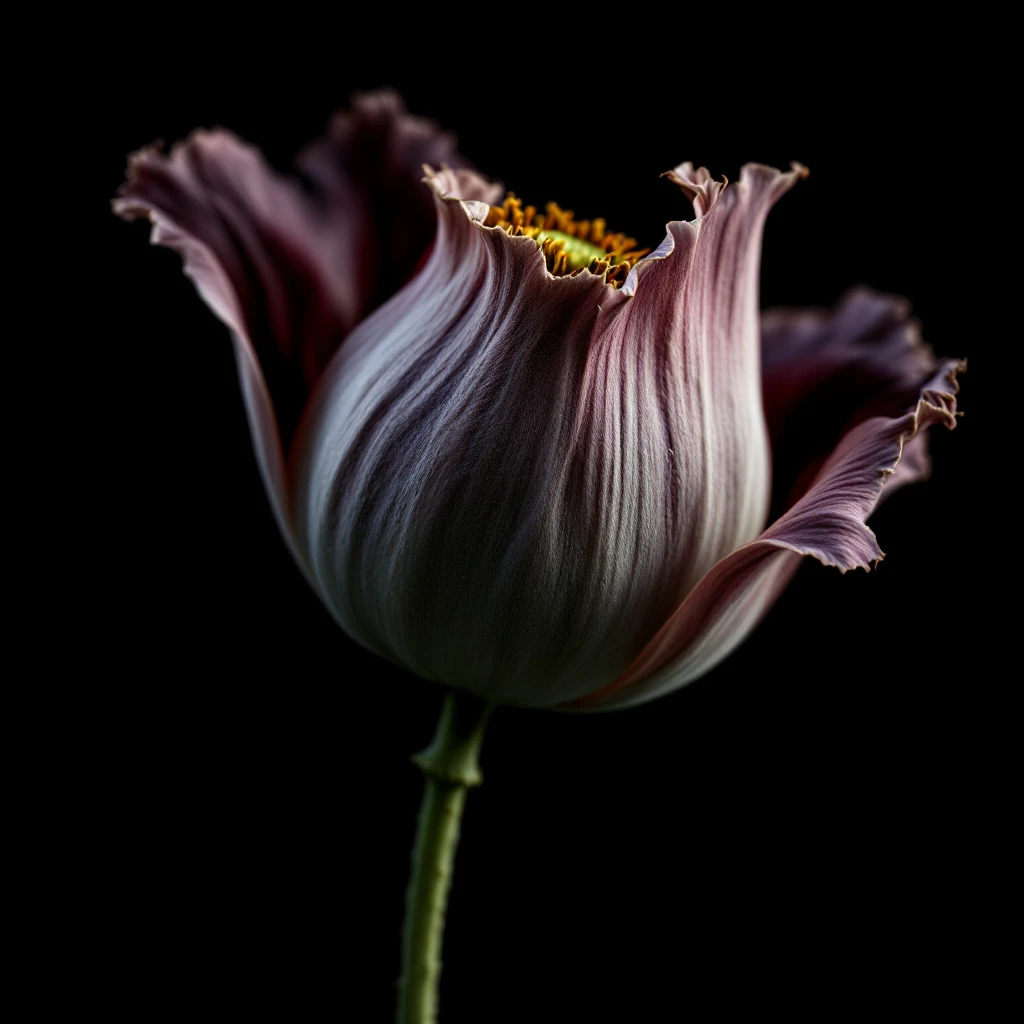
A fleeting green whisper with ethereal sweetness. The poppy bud offers a delicate, slightly narcotic freshness rarely captured in its true form, making it one of perfumery's most intriguing and elusive notes.
Character
How it smells
Green, fleeting, and almost intangible.
Real poppy bud extract is so rare that virtually every 'poppy' note in perfume is a synthetic reconstruction designed to capture that ephemeral freshness.




Origin
Eastern Mediterranean
Papaver somniferum has been cultivated for over 4,000 years, originally in the Eastern Mediterranean region where it was prized by ancient Sumerians, Egyptians, and Greeks for both medicinal and ritual purposes. The opium poppy's significance in ancient cultures was profound, appearing in mythological texts and medical preparations. However, perfumery's relationship with poppy is more recent and largely metaphorical.
The Victorians associated poppies with sleep and death, drawing on literary symbolism. In modern fragrance, poppy notes emerged as perfumers sought to capture ephemeral spring qualities. The bud itself, representing potential before bloom, carries different symbolism than the full flower.
Today, poppy bud remains more conceptual than material in the perfumer's palette, with its scent living primarily in synthetic recreations that honor the original botanical's fleeting character.
Wears it best
Fragrances featuring Poppy Bud
Good to know
Questions, answered
The essentials on Poppy Bud in perfumery: how it smells, where it comes from, and how it behaves on skin.
Is poppy bud used as a natural ingredient in perfume?
No. True poppy bud absolute is virtually nonexistent in commercial perfumery due to minimal aromatic yield and legal restrictions. Perfumers use synthetic reconstructions to recreate the fresh, green, slightly sweet character of the bud.
What does poppy bud smell like?
Poppy bud conveys a fresh, green, ethereal quality with subtle sweetness and a hint of the poppy flower's delicate character. The scent is often described as dewy, innocent, and fleeting.
Where does the poppy used in perfumery originate?
Papaver somniferum originated in the Eastern Mediterranean and has been cultivated there for thousands of years. Modern cultivation occurs in regulated regions including Tasmania, India, and parts of Europe.
What gives poppy bud its characteristic scent?
The characteristic fresh, green character comes from the bud's unique combination of developing floral compounds and fresh plant tissues. Reconstructed versions typically combine heliotropin derivatives with green accord materials.
Is poppy bud safe in perfumery?
Yes. Synthetic poppy reconstructions are rigorously tested for safety and comply with IFRA standards. The reconstructed materials used in perfumery are completely different from opium latex compounds.
What fragrances feature poppy bud notes?
Several niche and designer fragrances feature poppy or poppy-inspired notes, particularly those seeking fresh spring qualities. Examples include Narciso Rodriguez for Her and various floral compositions from the 2000s onward.
How does poppy bud blend with other fragrance notes?
Poppy bud works as a bridging note between green and floral elements. It pairs naturally with lily of the valley, peony, green tea, and light musks, adding ethereal freshness to spring-like compositions.
Why is poppy bud considered rare in perfumery?
The poppy bud produces negligible amounts of extractable aromatic material compared to the flower or seed pod. Combined with legal cultivation restrictions, natural poppy bud material is effectively unavailable to perfumers.




