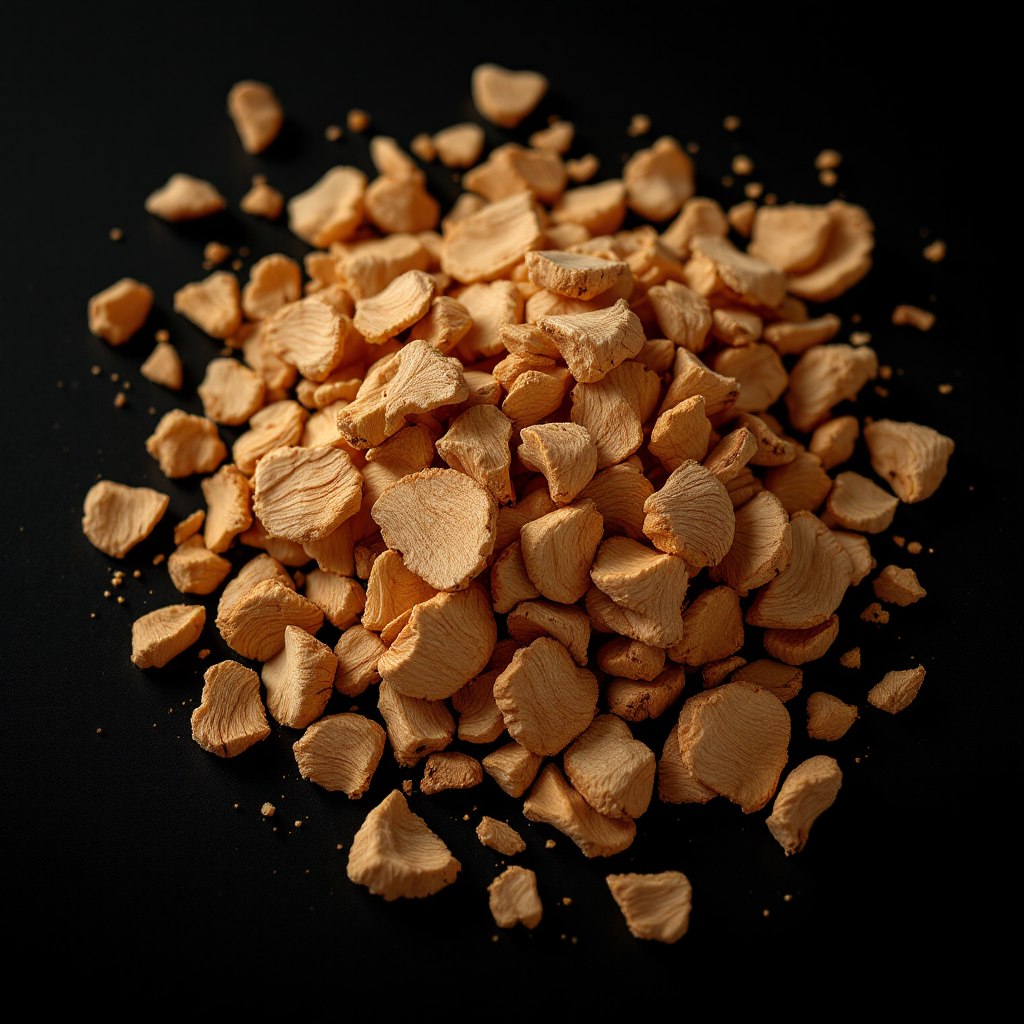
Incense Woods
Incense woods are resinous materials harvested from trees in Africa, the Middle East and India. They carry smoke, sacred tradition and centuries of sensory memory in every drop.
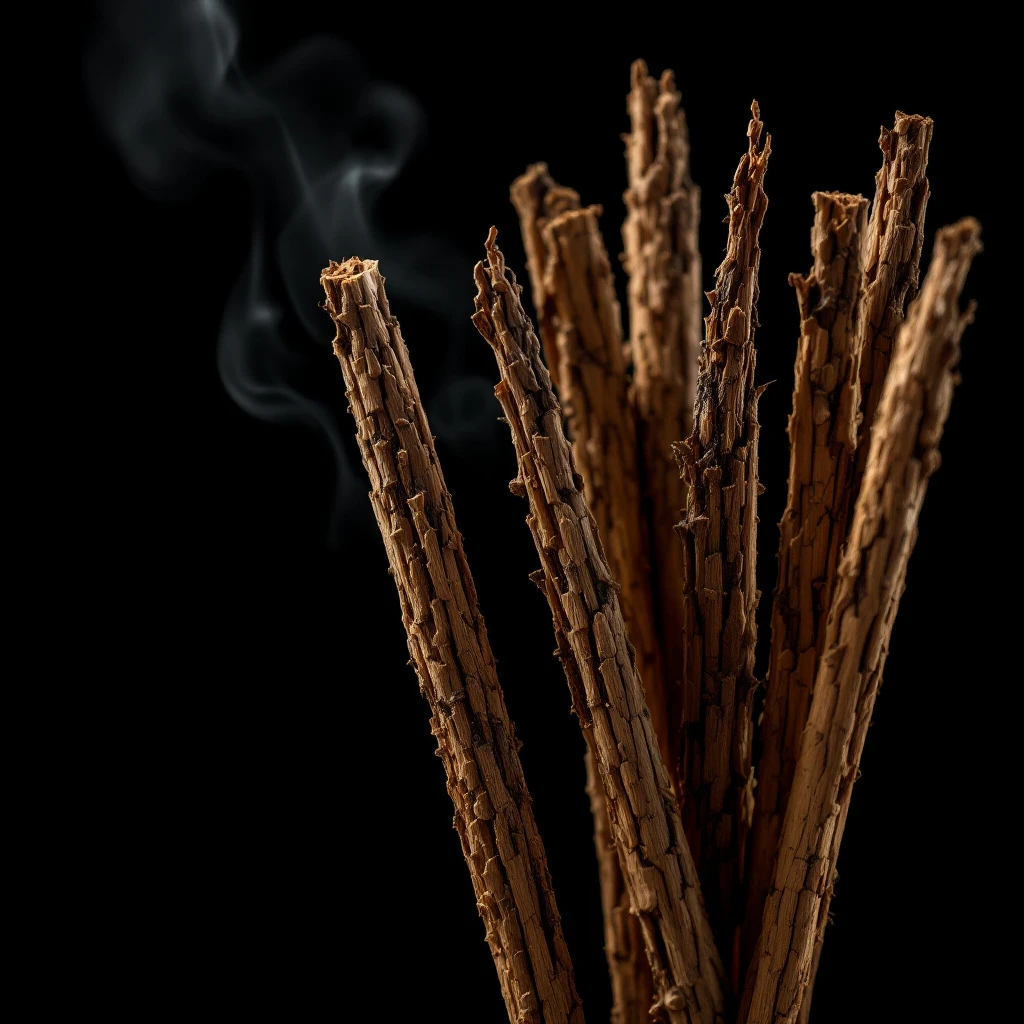
Character
How it smells
Sacred smoke captured in fragrance.
Some varieties of agarwood command prices higher than gold per ounce due to extreme rarity.




Origin
Oman
Ancient Egyptians burned incense during religious ceremonies and stored fragrant resins in fat-based balms for personal wear. Mesopotamians documented incense trade on clay tablets dating to 1800 BCE. The famous Trade Routes of Arabia, sometimes called the Incense Route, connected southern Arabian kingdoms with Mediterranean markets, making frankincense from Oman one of the most valuable commodities of the ancient world.
Caravans transported resin across hundreds of kilometers of desert, creating economic networks that predated written history. Greeks, Romans, Persians and Arabs all refined incense use in perfumery, adapting traditional burning practices into more sophisticated extraction techniques. Medieval Arabian perfumers developed processes to capture incense smoke as oil, bridging ritual practice with commercial fragrance production.
This historical layering, spanning thousands of years and multiple civilizations, explains why incense notes carry such deep associative power in modern perfumery.
Wears it best
Fragrances featuring Incense Woods
Brands
Brands known for Incense Woods
Good to know
Questions, answered
The essentials on Incense Woods in perfumery: how it smells, where it comes from, and how it behaves on skin.
What does incense wood smell like?
Incense wood typically presents as smoky, balsamic and slightly citrusy with resinous sweetness. Actual scent varies by species: frankincense reads as clean church smoke, while oud adds animalic complexity with notes of dark honey and aged leather.
Is incense wood natural or synthetic?
Natural incense wood comes from tree resin, most commonly frankincense, myrrh and agarwood. Synthetics exist that mimic specific aromatic compounds but lack the full complexity of natural resin extracts.
What tree produces frankincense?
Boswellia sacra and related Boswellia species produce frankincense resin. These trees grow primarily in Somalia, Oman, Yemen and parts of India. Sustainable harvest requires careful scoring techniques to avoid killing the tree.
Why is agarwood so expensive?
Agarwood forms only when Aquilaria trees become infected with a specific fungus, a rare and unpredictable occurrence. Natural infection takes decades. Demand far exceeds supply, particularly for high-grade material from Vietnam and Assam.
How long have humans used incense resin?
Archaeological evidence places incense use at approximately 3000 BCE in ancient Egypt and Mesopotamia. The practice likely predates written records, with some estimates suggesting ceremonial burning began even earlier.
Does incense wood last long on skin?
Incense wood materials function as base notes in fragrance formulations. Natural extracts typically persist for eight to twelve hours, with oud among the most lingering materials in perfumery.
Can incense wood cause skin reactions?
Some natural incense resins contain allergenic compounds that may trigger contact dermatitis in sensitive individuals. Limonene and pinene content varies by species and harvest conditions.
Which fragrance families use incense wood most often?
Oriental and woody fragrances rely most heavily on incense materials. Amber, chypre and certain fougere formulations also incorporate these notes to add depth and smoky resonance.