Hawthorn Honey
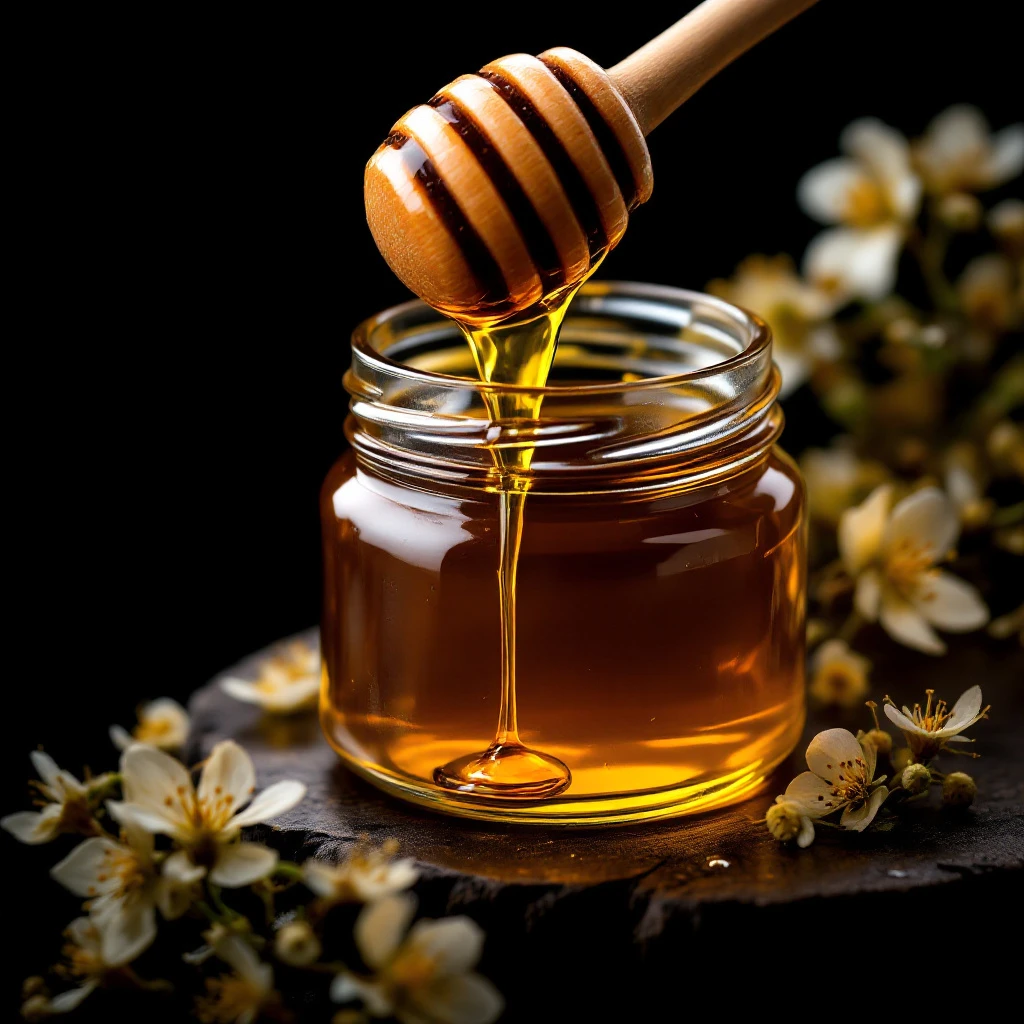
Hawthorn Honey brings a warm, nectarous sweetness to fragrances, balancing delicate floral tones with rich, gourmand depth. This ingredient captures the golden essence of hawthorn blossoms and their honeyed nectar, adding a tactile, almost velvety quality to perfume compositions.
Character
How it smells
Golden nectar from spring hawthorn blossoms.
Bees that pollinate hawthorn in full bloom produce a distinctly amber-hued honey with a marzipan-like finish that perfumers prize.






Origin
France
Hawthorn has deep roots in European herbalism and folklore spanning thousands of years. Ancient Greeks and Romans associated the shrub with hope and spring fertility, often weaving its flowering branches into ceremonial garlands.
Medieval herbalists documented hawthorn's use in remedies and aromatic preparations. The plant's symbolic connection to May Day and the arrival of spring made its blossoms a recurring motif in seasonal traditions across France, England, and Germany.
As perfumery evolved from monastic apothecary craft into a formal art during the 19th century, perfumers began incorporating hawthorn's honeyed floral character into new fragrance creations. The warm, nectarous quality of hawthorn proved especially suited to the romantic, nature-inspired compositions popular during the Belle Époque, establishing it as a lasting note in the perfumer's palette.
Wears it best
Fragrances featuring Hawthorn Honey
Brands
Brands known for Hawthorn Honey
Good to know
Questions, answered
The essentials on Hawthorn Honey in perfumery: how it smells, where it comes from, and how it behaves on skin.
What does Hawthorn Honey smell like in a fragrance?
Hawthorn Honey delivers a warm, nectarous sweetness with delicate floral undertones. Its scent profile blends the softness of hawthorn blossoms with rich honeyed depth, often revealing subtle almond and marzipan nuances on the dry-down.
How is Hawthorn Honey produced for perfumery?
Hawthorn blossoms are harvested by hand during the brief May-to-June flowering window. The petals undergo solvent extraction to pull aromatic compounds, yielding a concentrate that captures the ingredient's characteristic honeyed, floral profile.
Is Hawthorn Honey a natural or synthetic ingredient?
Hawthorn Honey typically starts with natural hawthorn blossom extract obtained through solvent extraction. Perfumers frequently pair this natural material with synthetic honey aromatics to ensure consistency, strength, and shelf stability in final formulations.
What type of fragrances pair well with Hawthorn Honey?
Hawthorn Honey works exceptionally well in gourmand fragrances, floral compositions, and oriental perfumes. It adds warmth and depth to amber bases while lending a natural, honeyed sweetness that rounds out sharp top notes.
What part of the hawthorn plant is used in perfumery?
Perfumers use the flower blossoms of the hawthorn shrub. The delicate petals contain the volatile aromatic compounds responsible for hawthorn's characteristic honeyed-floral scent profile.
Where does Hawthorn Honey originate from?
Hawthorn (Crataegus) grows natively across temperate Europe, including France, where hawthorn blossom extraction for perfumery use is concentrated. The shrub flourishes in hedgerows and woodland margins throughout the region.
Does Hawthorn Honey appear in historical perfumery?
Hawthorn found early use in European herbalism and folk traditions before entering perfumery during the 19th century. Its honeyed floral character became particularly popular in romantic, nature-inspired fragrances of the Belle Époque era.
How does Hawthorn Honey contribute to fragrance longevity?
As a honeyed base-note material, Hawthorn Honey adds warmth and viscosity that helps anchor lighter top notes. Its sticky, nectarous character creates lingering sillage and contributes to the overall staying power of a fragrance composition.