Greek Honey
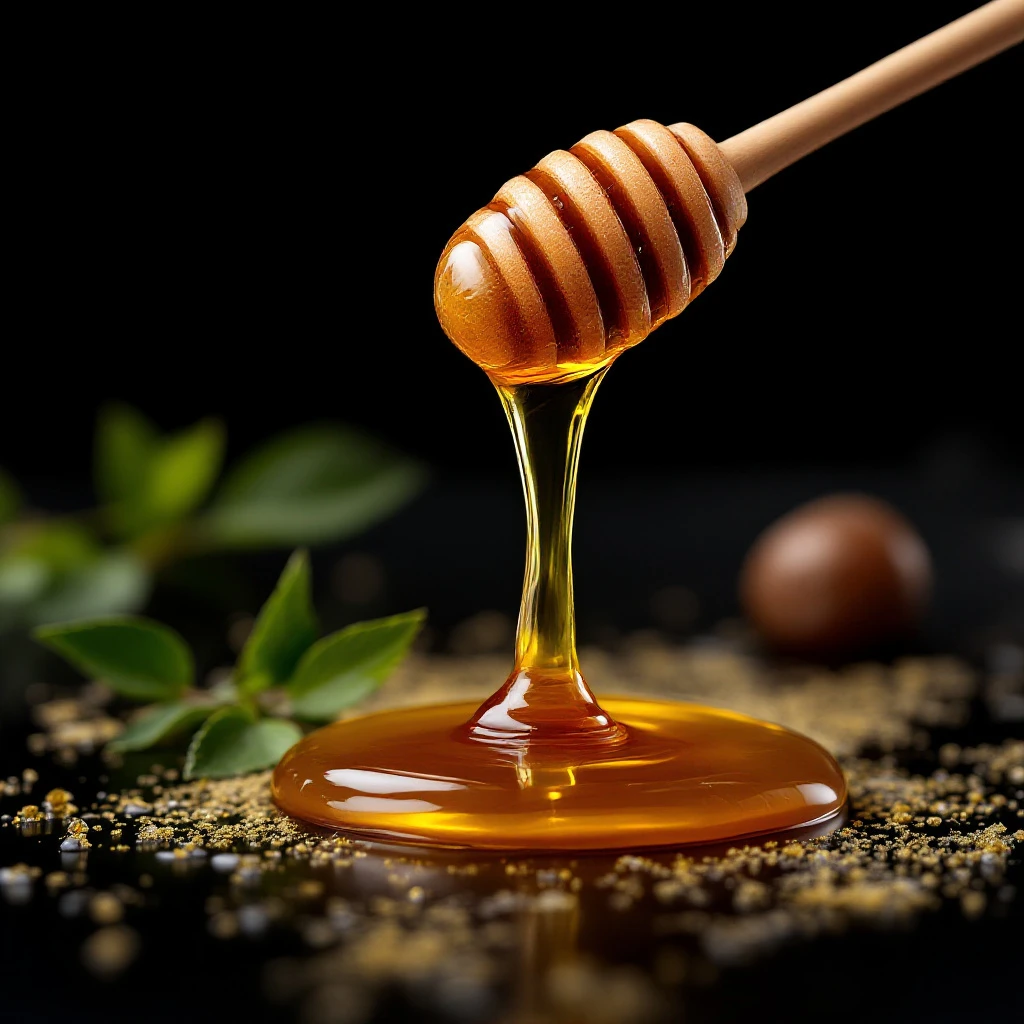
Golden, resinous, and sun-warmed. Greek honey brings a syrupy sweetness to perfumery, evoking thymeblossom fields, ancient trade routes, and a sweetness older than distillation itself.
Character
How it smells
Liquid sunlight from the Aegean
Cave paintings in Spain's Cuevas de la Araña depict honey harvesting from wild beehives over 8,000 years ago, making honey one of humanity's oldest known sweeteners.
Pairs beautifully with




Origin
Greece
Honey occupies a singular place in Mediterranean civilization, and Greece stands as one of its oldest cultural strongholds. Archaeological evidence from Knossos suggests Minoan beekeepers managed hives around 1700 BCE, with clay models of apiaries found at the palace site. Greeks viewed honey as food for the gods: ambrosia, the nectar of Olympus, was widely believed to contain it, and bees served as messengers between the mortal and divine worlds.
Beyond the kitchen and altar, honey entered Greek perfumery during Classical antiquity. Greek artisans crafted unguents, fragrant oils designed for skin and hair, and several recipes included honey as a sweet, viscous base that helped carry aromatic resins like myrrh, labdanum, and balsam. The compound known as Melinium referenced in ancient sources hints at honey's role in these blends.
The trade in honey spread along Mediterranean shipping routes, connecting Aegean islands to Egypt, Carthage, and beyond. By the Hellenistic period, perfumed oils containing honey reached as far as the Indus Valley. Today, Greek thyme honey remains a protected regional product, and its inclusion in modern niche perfumery nods to a tradition stretching back nearly four millennia.
Wears it best
Fragrances featuring Greek Honey
Brands
Brands known for Greek Honey
Good to know
Questions, answered
The essentials on Greek Honey in perfumery: how it smells, where it comes from, and how it behaves on skin.
What does Greek honey smell like in perfume?
Greek honey in fragrance smells warm, golden, and syrupy, with a slightly herbal edge from thymol when sourced from thyme-fed bees. Unlike synthetic honey notes, natural honey absolutes carry waxy, faintly smoky undertones and a softer, less candy-like sweetness. The effect is sun-warmed rather than sugary, grounded in resinous, almost balsamic depth.
Is Greek honey used in real perfumes or only natural perfumery?
Both. Mainstream and niche houses alike use honey accords, though most are reconstructed synthetically due to cost and consistency. Greek thyme honey and beeswax absolutes appear in select artisan and natural-perfumery lines, valued for terroir-driven complexity. Synthetic reproductions often combine ethyl phenylacetate with waxy and herbal molecules to mimic the effect.
How is Greek honey extracted for perfumery?
Honey and beeswax absolutes are typically produced through solvent extraction, where raw material is dissolved in ethanol or hexane, then filtered and concentrated. Supercritical CO2 extraction is a newer alternative that preserves delicate top notes without thermal damage. Neither method resembles home honey production; the goal is capturing volatile aromatics, not edible sugar.
What is the difference between Greek honey accord and beeswax absolute?
Greek honey accords in perfumery are usually built from aroma molecules like methyl phenylacetate, while beeswax absolute is a real extracted product with a warmer, waxier, more animalic character. Beeswax carries the hive's accumulated scent: propolis, pollen, and wax, layered with subtle sweetness. Honey accords emphasize sugary facets; beeswax absolutes feel richer and more skin-like.
Why is Greek thyme honey special for fragrance?
Greek thyme honey contains high thymol levels from bees foraging on wild Thymus capitatus across rocky Mediterranean hillsides. This gives it a distinctive herbal, almost medicinal undertone beneath the sweetness, a profile flat floral honeys lack. The EU recognizes Greek thyme honey as a Protected Designation of Origin product, tying its character to specific terroir.
Did ancient Greeks use honey in perfume?
Yes. Ancient Greek perfumers incorporated honey into scented oils and unguents called myrrh-based compounds and melinium-style blends, where its viscosity helped suspend aromatic resins. Greek beekeeping dates to at least 1700 BCE, confirmed by clay apiary models found at Knossos, making it one of perfumery's oldest documented functional ingredients.
Is Greek honey the same as Middle Eastern or Mediterranean honey?
Not exactly. Greek honey, particularly thyme and pine varieties, has a distinctive herbal and resinous character tied to native flora. Middle Eastern honeys, such as those from Yemen or Saudi Arabia, often taste darker and more caramelized from desert plants. Mediterranean honeys share regional overlap, but botanical source and climate shape each profile uniquely.
What fragrance families does Greek honey work best in?
Greek honey excels in Oriental and Amber compositions, where it amplifies resins like labdanum, benzoin, and myrrh. It also shines in gourmand fragrances paired with vanilla or tonka, and in tobacco-honey blends popular in niche perfumery. Its warmth bridges floral heart notes and woody bases, adding depth without overpowering brighter top notes.




